

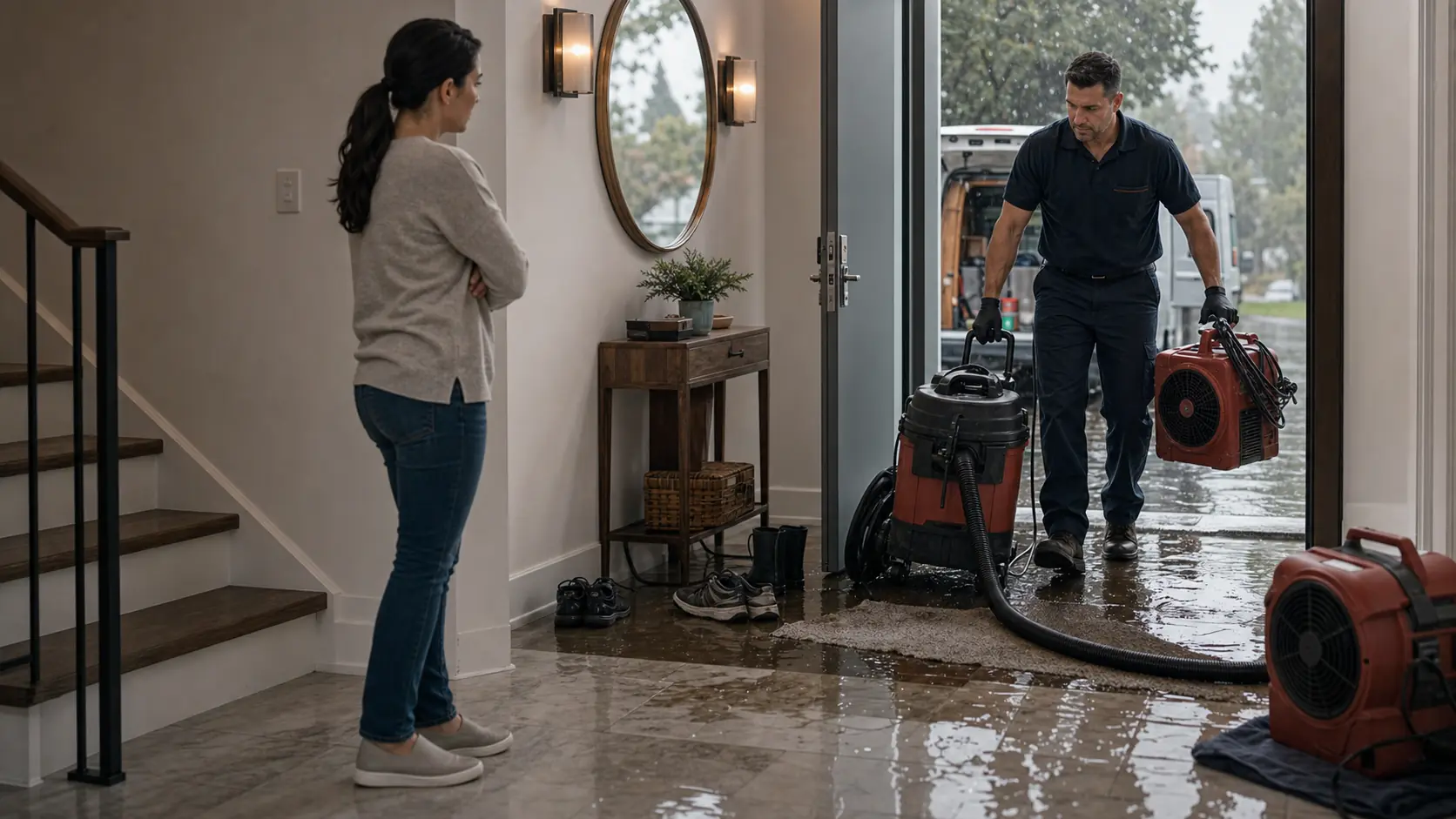
Overview
When a winter storm pushes water into your home — through the roof, a window, the foundation, or an overwhelmed drain — the steps you take in the first hour shape the outcome. Storm flooding has a few wrinkles that ordinary leaks don't (contaminated water, ongoing weather, power risks), so here's exactly what to do. (General guidance; follow any official emergency instructions.)
1. Prioritize safety
- Watch for electrical hazards — if water is near outlets, the panel, or appliances, don't enter until power to those areas is off, and never touch electrical items while in water.
- Treat storm/flood water as potentially contaminated. Rising water from outside (storm drains, creeks, runoff) can carry sewage and debris — avoid contact and keep children and pets away. This is different from a clean burst pipe.
- Don't drive or walk through deep moving water outside.
2. Stop more water from entering (if safe)
If the source is identifiable and reachable safely — an overflowing gutter dumping at one spot, a specific roof leak — do what you safely can to divert or contain it (buckets, towels, tarps, moving items out of the path). Don't take risks on a roof or in deep water during an active storm.
3. Move belongings to safety
Get valuables, electronics, documents, and furniture out of the water and to a dry, higher area if you can do so safely.
4. Document for insurance — early and thoroughly
Photograph and video the flooding and damage as it's happening and before cleanup. Note the source if you can tell (roof, window, foundation, drain). Documentation is critical — and remember the coverage distinction: sudden internal water events are often covered, but external flooding requires separate flood insurance (see does homeowners insurance cover water damage?).
5. Call for professional help
Call a restoration company as soon as it's safe — during major storms, the faster you're in the queue and the faster extraction begins, the better. We answer 24/7 through the rainy season: (408) 639-5349. Fast structural drying is what prevents storm moisture from becoming a mold problem.
6. Begin safe cleanup only where appropriate
For clean-water intrusion in a safe area, you can start removing water (mop, wet/dry vac — not a household vacuum) while waiting. For contaminated storm/flood water, don't attempt DIY cleanup — treat it like the biohazard it may be and let professionals handle it.
After the immediate crisis
Once the active flooding is handled, work through an after-storm damage checklist to catch everything — including hidden moisture that needs drying.
The takeaway
Storm flooding adds safety and contamination factors on top of ordinary water damage. Lead with safety, document early, get professional help fast, and don't DIY contaminated water. Quick action limits both the damage and the health risk.