
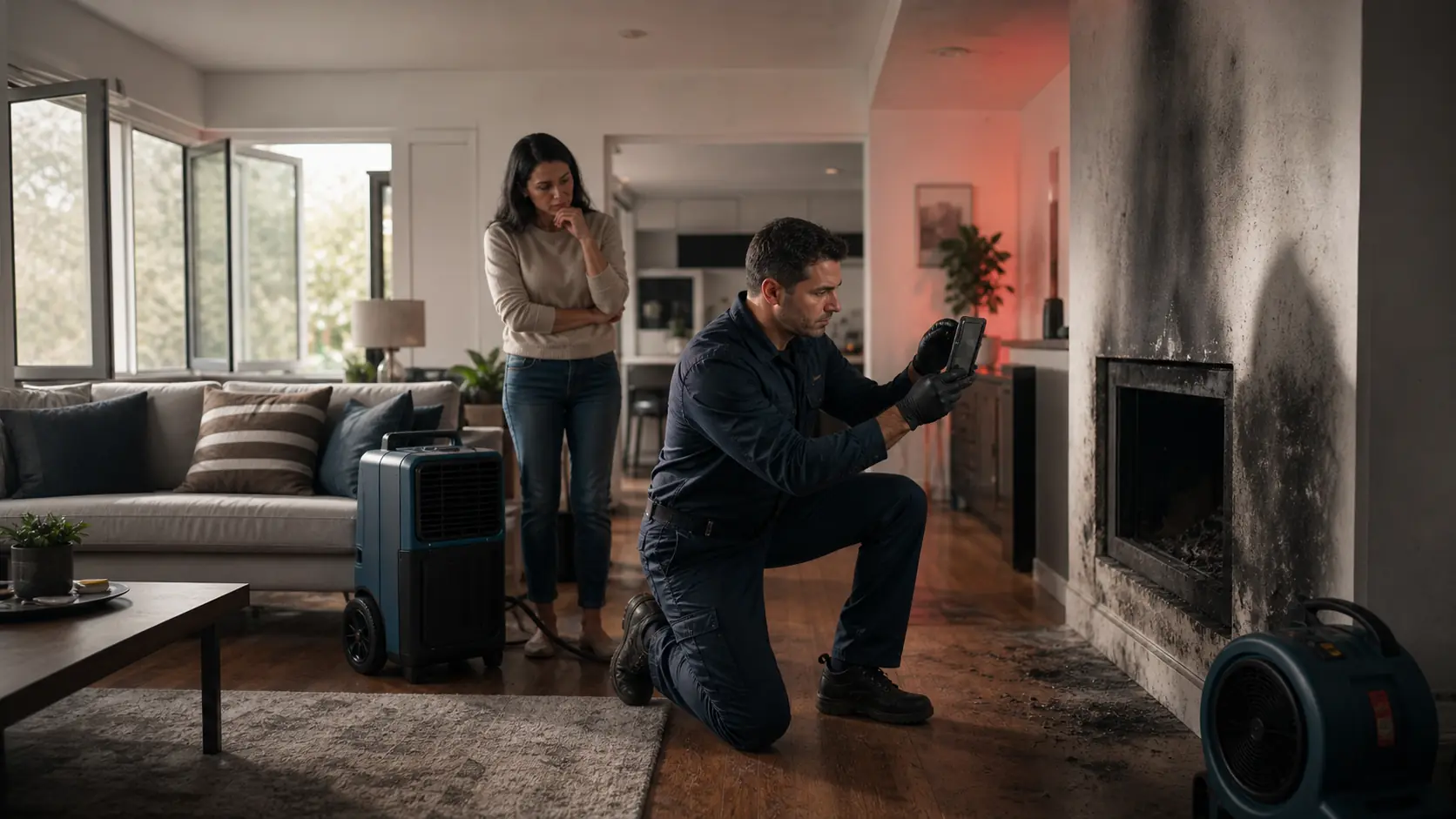
The aftermath of a house fire is overwhelming and disorienting. Knowing the right steps — in the right order — helps you stay safe, protect your family, and set up the recovery to go as smoothly as possible. Here's what to do. (General guidance; always follow instructions from fire officials.)
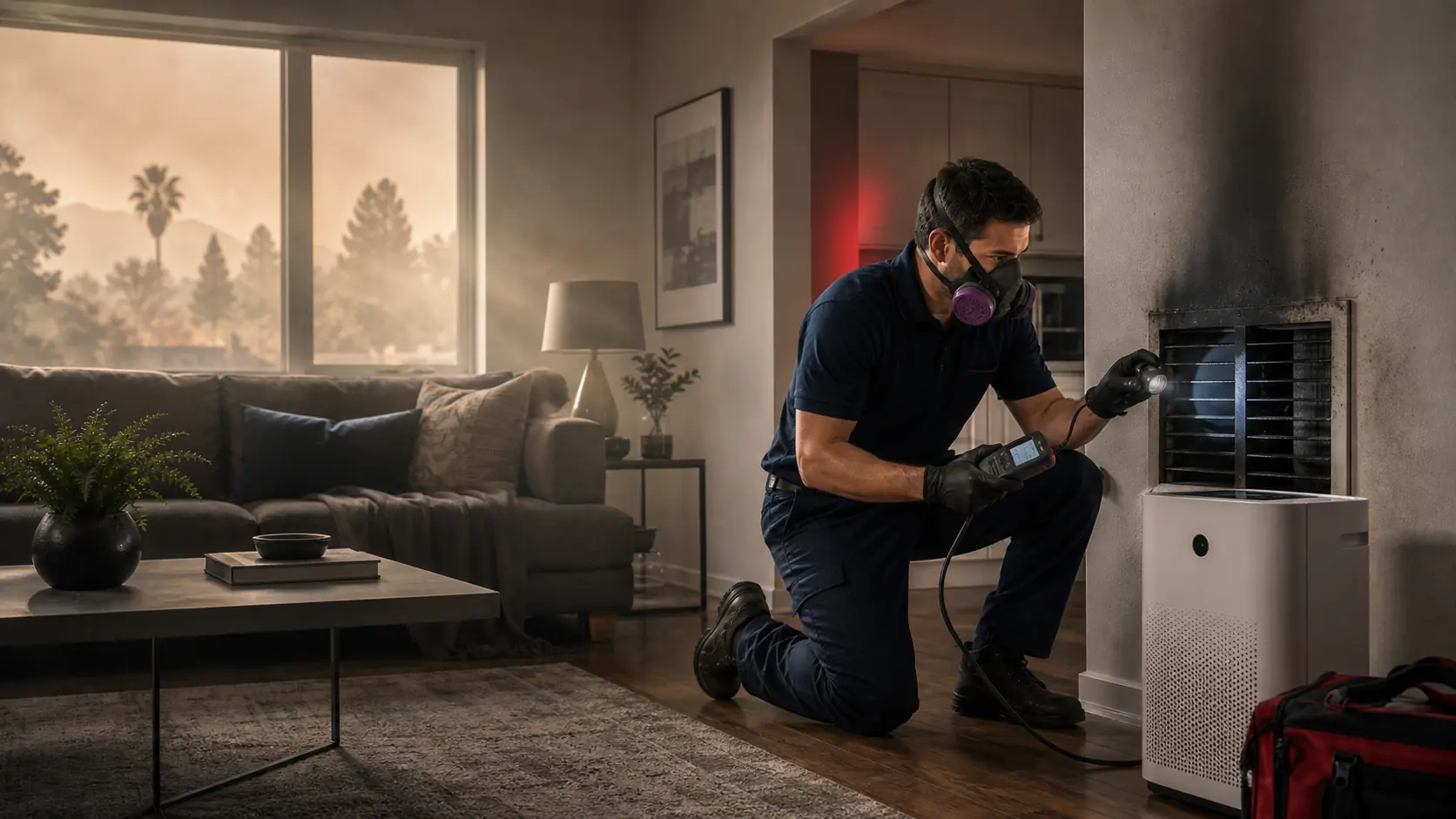
You don't have to be anywhere near the flames for a wildfire to affect your home. During California's fire season, smoke travels for miles, and South Bay homeowners regularly find their houses filled with that acrid smell, a fine layer of ash, and lingering haze long after the air clears outside. Here's what wildfire smoke actually does indoors — and how to deal with it properly. (General information.)
Smoke & Soot Damage: Why DIY Cleaning Makes It Worse
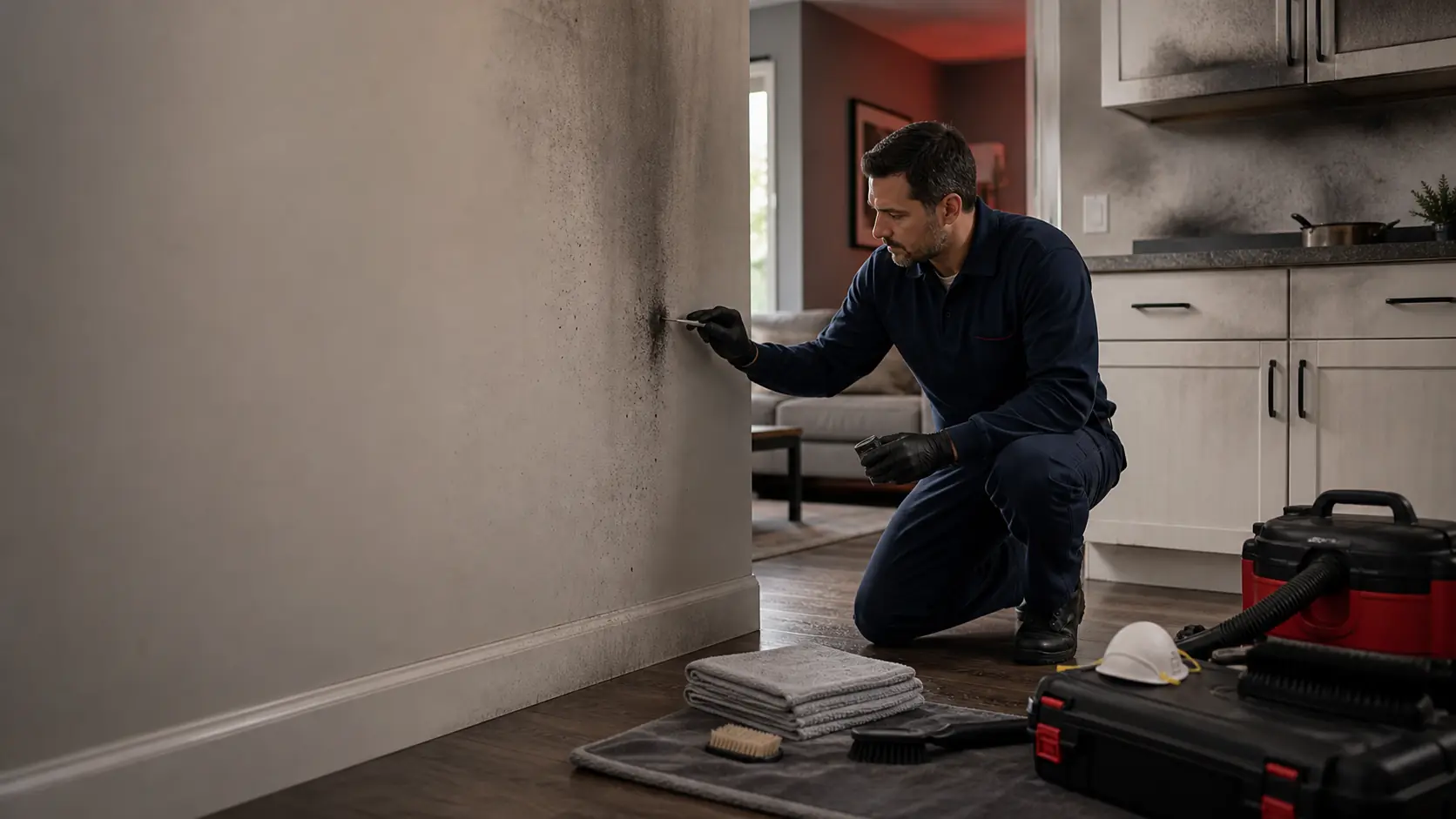
After a fire — even a small one — the instinct is to grab a sponge and start cleaning. It's understandable, but with soot it often backfires: improper cleaning can smear residue deeper, set stains permanently, and spread the damage to areas the fire never touched. Here's why soot is so tricky and what the right approach looks like. (General information.)
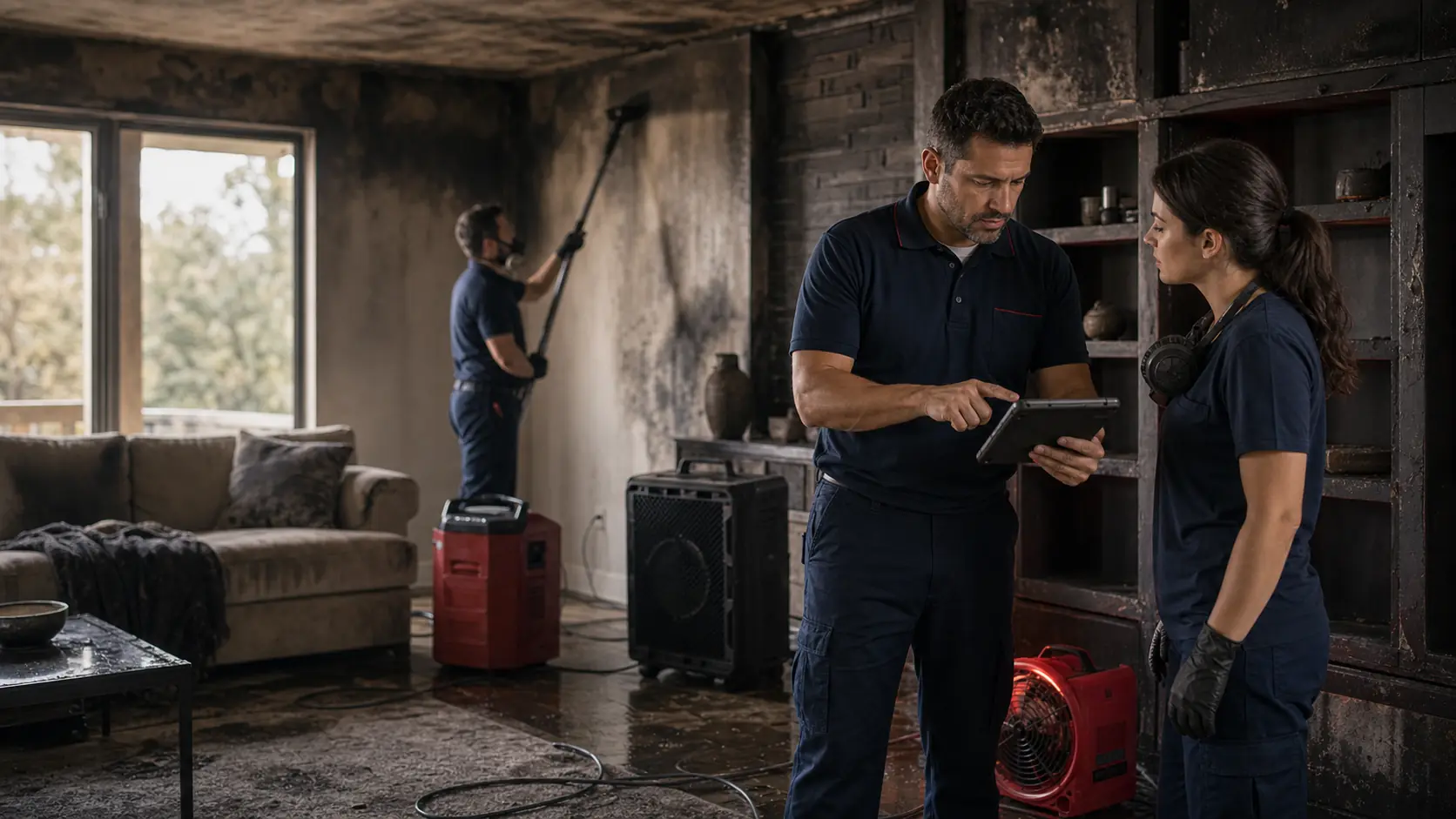
Fire damage restoration is more involved than most people expect, because a fire leaves several layered problems behind — char, soot, smoke odor, and water from firefighting — that all have to be addressed together. Here's the full process, step by step, so you know what to expect. (General overview; every job is assessed individually.)
Fire damage restoration cost spans an enormous range — from relatively modest figures for smoke and soot cleanup after a small, contained fire, to very substantial amounts for major fires requiring structural rebuilding. The reason for the wide range is that "fire damage" is really several types of damage layered together. Here's what shapes the cost.