

Overview
The aftermath of a house fire is overwhelming and disorienting. Knowing the right steps — in the right order — helps you stay safe, protect your family, and set up the recovery to go as smoothly as possible. Here's what to do. (General guidance; always follow instructions from fire officials.)
1. Make sure everyone is safe and accounted for
People first. Ensure everyone is out and okay, and get medical attention for any injuries or smoke inhalation. Stay out of the home until officials say it's safe.
2. Do NOT re-enter until cleared
This is critical. A fire-damaged structure can be unstable — weakened floors, ceilings, and supports — and the air may contain hazardous soot and chemicals. Wait for the fire department to declare it safe before going back inside, even briefly to grab belongings.
3. Contact your insurance company
Call your insurer as soon as you're able to open a claim. Fire damage is typically covered by homeowners and commercial policies. Ask about Additional Living Expenses (ALE) coverage for temporary housing if your home is uninhabitable, and what they need from you. (See how we handle insurance claims.)
4. Secure the property
A fire-damaged home is vulnerable to weather and intrusion through broken windows, holes, or a compromised roof. Board-up and tarping protect what's left and are often required by your policy to prevent further damage. A restoration company can secure the property quickly — we do this as part of our response.
5. Don't start cleaning soot yourself
As tempting as it is, improper cleaning of soot and smoke can cause permanent staining and spread the residue. Leave it for professionals who match the method to the soot type — see why DIY cleaning makes it worse.
6. Document everything
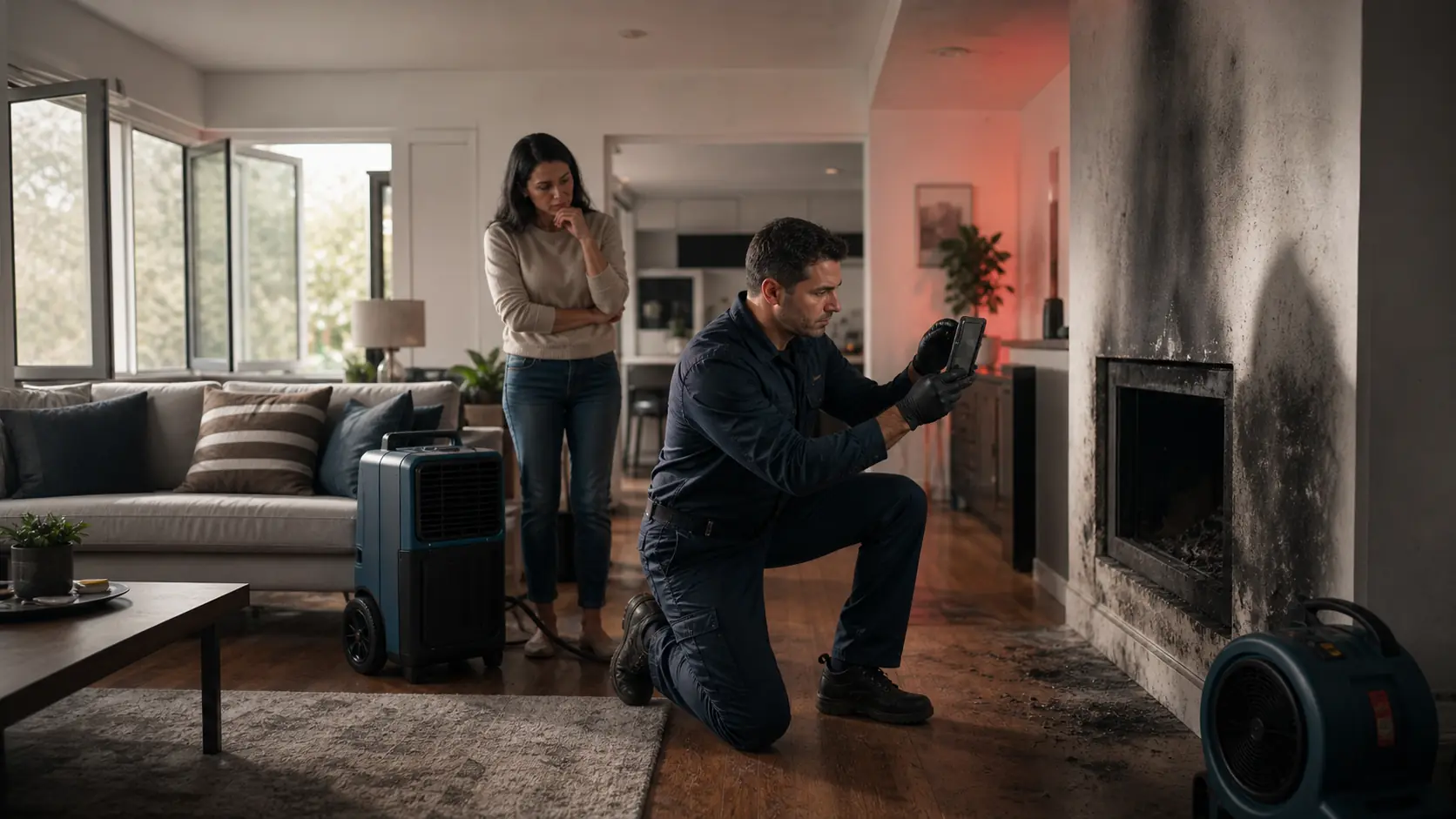
Once it's safe and with the insurer's guidance, photograph and video the damage thoroughly for your claim, and begin listing damaged belongings. (See documenting damage for your insurance claim.)
7. Call a fire restoration company
The sooner restoration begins, the better the outcome — soot grows more corrosive and odor sets deeper every day. A professional will secure the property, address the firefighting water, clean soot and smoke, remove odor, and restore your home. We're FSRT-certified and respond 24/7.
8. Take care of the essentials
Gather important documents (or replace those lost), notify your mortgage company if relevant, and keep a record of all expenses related to the fire for your claim.
A note on the firefighting water
Fires are usually put out with a lot of water, which means most fire jobs are also water damage jobs. That water needs prompt extraction and structural drying to prevent mold — which is why fire restoration and water restoration go hand in hand.
FAQs
Can I go back inside after the fire is out?
Only after fire officials say the structure is safe. Fire-damaged buildings can have structural and air-quality hazards.
Should I clean soot before help arrives?
Avoid cleaning soot yourself. The wrong method can smear residue, set stains or spread contamination.
Why is there water damage after a fire?
Firefighting often uses large amounts of water, so extraction and drying are usually part of fire restoration.