

Overview
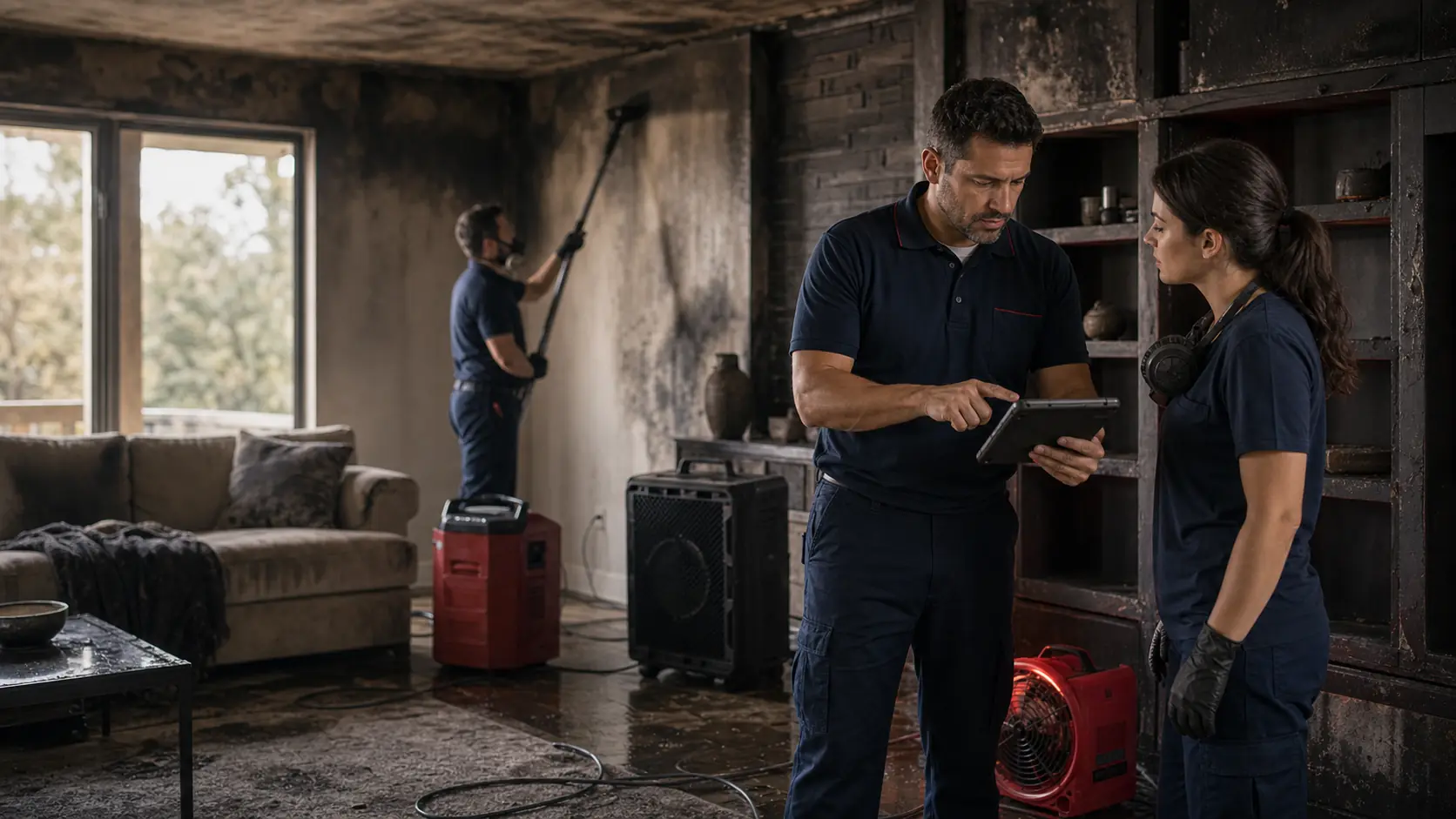
Fire damage restoration is more involved than most people expect, because a fire leaves several layered problems behind — char, soot, smoke odor, and water from firefighting — that all have to be addressed together. Here's the full process, step by step, so you know what to expect. (General overview; every job is assessed individually.)
Step 1: Emergency contact & 24/7 response
Restoration starts with a call. A good company answers around the clock, gathers key details, and dispatches a crew quickly — because the sooner the work begins, the more can be saved. We're on-site in about 45 minutes.
Step 2: Assessment & inspection
On arrival, technicians assess the full extent of the damage — fire, smoke, soot, and water — across the structure and contents, including areas the flames didn't reach but smoke did. This determines the scope and the plan, and it's done free of charge.
Step 3: Securing the property (board-up & tarping)
Fire often leaves broken windows, holes, or roof damage that expose the home to weather and intrusion. The crew boards up openings and tarps the roof as needed to protect the property from further damage — frequently a policy requirement, too.
Step 4: Water removal & drying
Because fires are extinguished with water, most fire jobs include water damage. Technicians extract standing water and dry the structure using professional structural drying — air movers, dehumidifiers, and moisture monitoring — to prevent mold. (This is why fire crews also need water-damage certifications like WRT/ASD.)
Step 5: Soot & smoke residue removal
This is the painstaking core of the work. Technicians clean soot from walls, ceilings, contents, and HVAC, matching the cleaning method to the type of soot and surface. Done right, it removes residue without smearing or staining — the opposite of what improper DIY cleaning causes.
Step 6: Odor removal (deodorization)
Smoke odor penetrates deep into porous materials, so surface cleaning isn't enough. Professionals use deodorization techniques that neutralize odor at the source throughout the affected areas and HVAC — eliminating the smell rather than masking it.
Step 7: Cleaning & sanitizing contents
Salvageable belongings — furniture, textiles, and personal items — are cleaned, deodorized, and restored where possible, with an honest assessment of what can be saved versus replaced.
Step 8: Restoration & rebuild
Finally, the property is restored to its pre-fire condition. This ranges from minor repairs and repainting to significant reconstruction for major fires, depending on the damage.
Throughout: insurance documentation
A good restoration company documents the loss thoroughly and works directly with your insurer across the whole process, supporting your claim. (See how we handle insurance claims.)
The takeaway
Fire restoration isn't one task — it's a coordinated sequence addressing char, soot, smoke odor, and water together. Handled promptly by certified pros, even significant fire damage can be fully restored.