

Overview
Here's the thing most people don't realize after a flood: getting the standing water out is only the beginning. Water wicks deep into drywall, subfloors, framing, and insulation, where it's invisible — and where it feeds mold within 24–48 hours if it isn't removed. Professional structural drying is the science of getting all of that hidden moisture out, properly and verifiably. Here's how it works.
Step 1: Measure the moisture
Drying starts with measurement. Using moisture meters and thermal imaging, technicians map exactly where moisture has traveled — often far beyond the visibly wet area. This baseline tells the crew what needs to dry and lets them verify when it's actually done.
Step 2: Extract and remove what can't be dried
Any remaining water is extracted, and materials that can't be effectively dried (like saturated padding or contaminated porous materials) are removed so the rest can dry faster.
Step 3: Create the right drying environment
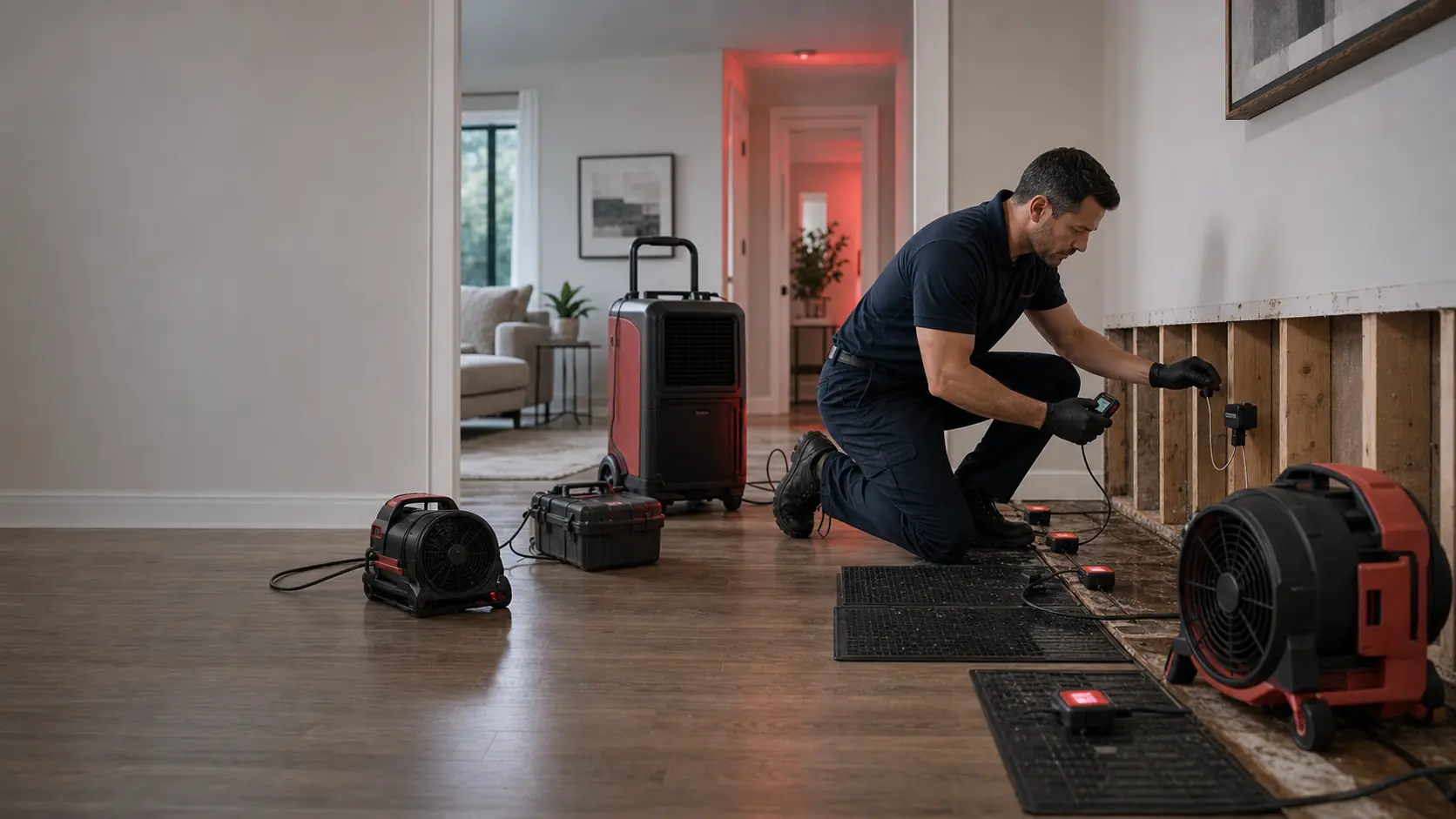
This is where the equipment comes in, placed strategically based on the moisture map:
Together these create a balanced drying system — evaporation, dehumidification, and air circulation working in concert. This is the heart of the Applied Structural Drying (ASD) discipline our technicians are IICRC-certified in.
- Air movers push high-velocity air across wet surfaces, speeding evaporation of moisture into the air.
- Commercial dehumidifiers then pull that moisture out of the air, lowering humidity so surfaces keep releasing water rather than re-absorbing it.
- Controlled temperature accelerates the process.
Step 4: Monitor daily until verified dry
Drying isn't "set it and forget it." Technicians return to measure moisture levels daily and adjust equipment placement, continuing until the structure reaches a documented dry standard — not just "looks dry." This is the step that separates professional drying from a few fans and hope.
Why it matters
Done right, structural drying saves materials that would otherwise be torn out (lowering your cost) and prevents the mold problem that incomplete drying creates. Skipping or rushing it is the single most common cause of mold after water damage — see why mold appears after water damage.