
Overview
It's one of the first questions homeowners ask, because flooring is expensive. The good news: floors can often be saved with fast professional drying — but it depends on three things: the flooring material, the water category, and how quickly drying started.
Hardwood
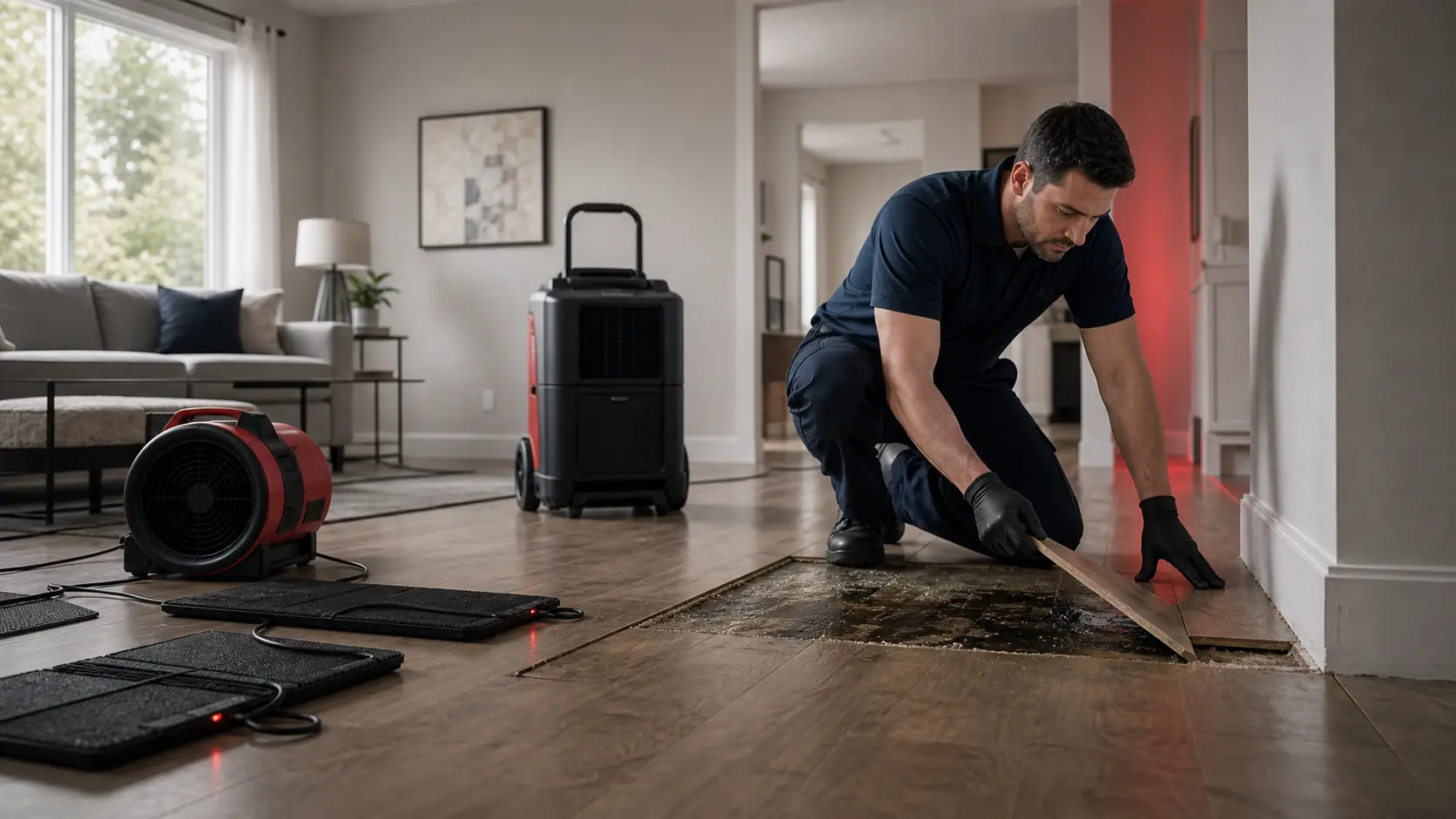
Solid hardwood can sometimes be saved if it's dried quickly and properly, though it may cup or crown temporarily as it dries and stabilizes. Specialized drying systems can pull moisture from hardwood, and many floors recover. The longer water sits, though, the lower the odds — prolonged saturation causes permanent warping and may loosen the subfloor bond. Engineered hardwood is more vulnerable because its layered construction can delaminate when soaked.
Laminate
Laminate is the least forgiving. Its fiberboard core swells and breaks down once water penetrates the seams, and it usually can't be restored — replacement is common after significant flooding.
Tile
Tile itself is highly water-resistant and usually survives. The concern is moisture trapped underneath — in the subfloor or thinset — which must be dried to prevent mold. Sometimes a few tiles are removed to dry the substrate, then replaced.
Carpet
Carpet flooded with clean water (Cat 1) can often be dried and saved if addressed quickly, though the padding underneath is usually replaced. Carpet exposed to gray or black water (Cat 2/3) is typically removed for health reasons.
Vinyl / LVP
Many modern luxury vinyl products are water-resistant, but water can still get trapped beneath them and affect the subfloor, which must be dried.
The deciding factor: speed
Across every material, fast extraction and professional structural drying are what tip the balance toward saving your floors. Water that's dried within the first day or two has a far better outcome than water that sat for a week. A professional assessment tells you honestly what can be saved versus replaced — and we'll never tear out what doesn't need to come out.