

Overview
Here's a connection many homeowners learn the hard way: water damage and mold are two chapters of the same story. Deal with the water properly, and mold never gets a chance. Handle it incompletely, and mold shows up days later. Here's why — and how to stop it. (General information, not medical advice.)
The 24–48 hour window
Mold spores are everywhere in the environment — they're harmless until they get what they need to grow: moisture, a food source, and time. After water damage, a home suddenly offers all three. Drywall, wood, insulation, and dust are all food. The moisture is the water that soaked in. And mold can begin colonizing within 24 to 48 hours of materials staying wet. That short window is why fast response matters so much.
Why "looks dry" isn't dry
This is the crux. After a leak or flood, surfaces can feel dry to the touch while the materials behind them — inside walls, under flooring, in subfloors and framing — remain saturated. That hidden moisture is invisible but perfect for mold. Mopping up the visible water and running a household fan rarely removes it. The water "disappears" from view but stays in the structure, and mold quietly takes hold.
The most common mistake
The single biggest cause of post-water-damage mold is incomplete drying — a leak that's patched but the wet cavity never properly dried, or a flood that's cleaned on the surface but not dried through the structure. Weeks later, a musty smell and stains appear, and now it's a mold job on top of the original water job.
How proper drying prevents mold
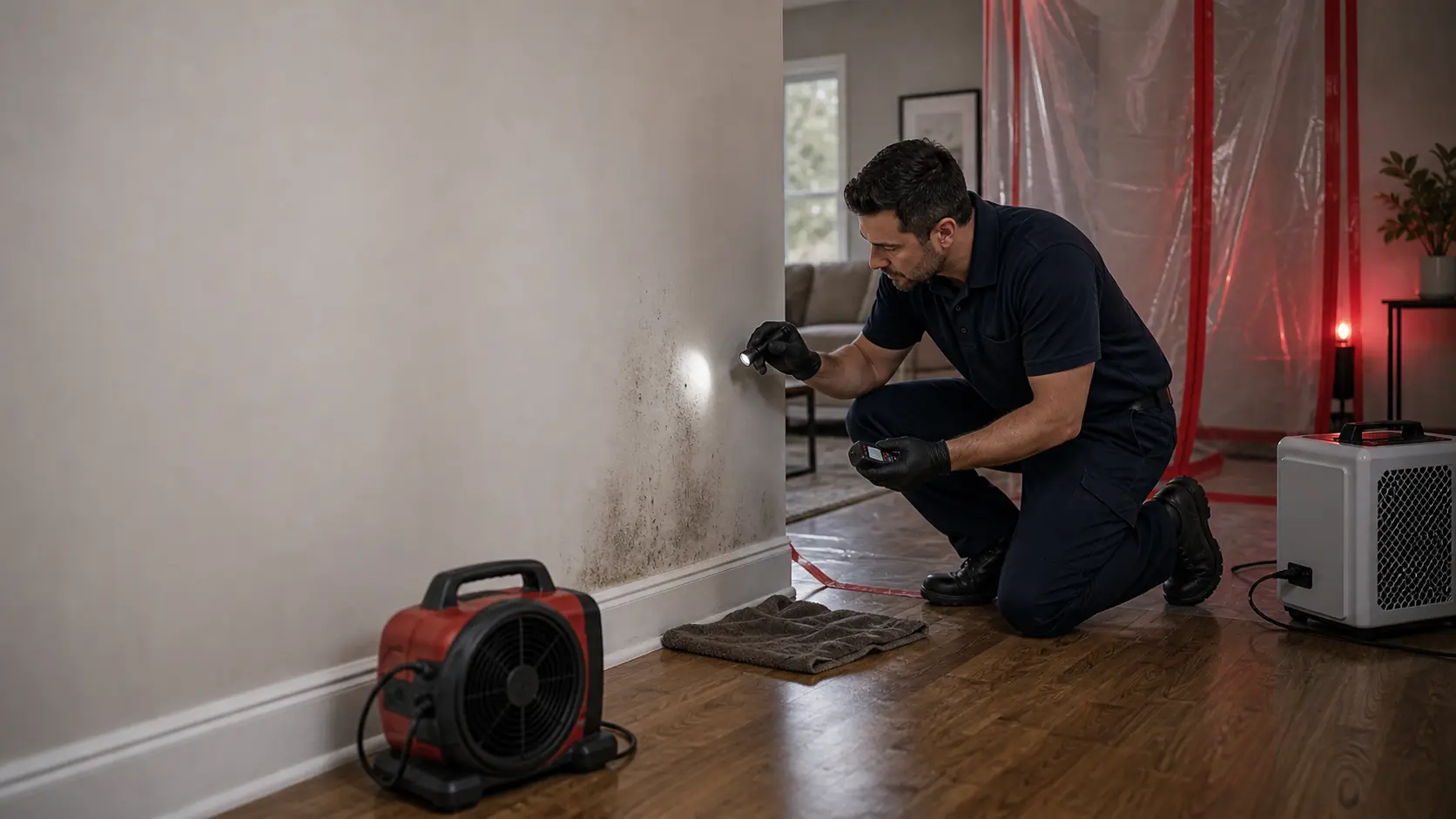
Professional structural drying is the prevention. It uses moisture mapping to find all the wet areas (including hidden ones), then air movers and commercial dehumidifiers to dry the structure to a verified standard — with daily monitoring until it's actually dry, not just surface-dry. Remove the moisture within the window, and mold never gets its foothold.
What to do after water damage
1. Act fast — within hours, not days. 2. Get professional extraction and drying, not just surface cleanup. 3. Make sure hidden moisture is found and dried — ask how they verify dryness. 4. Fix the source so it doesn't happen again.
If mold has already appeared, it means moisture lingered — and now both the mold and its source need addressing. Our mold remediation handles both.
The simple truth
Mold after water damage is almost always preventable. The prevention is fast, complete, professional drying. The cure — once it's started — is proper remediation plus fixing the moisture. Either way, the moisture is the real enemy.