

Overview
You might not think of Silicon Valley as a mold hotspot — it's known for sunshine, not swamps. But San Jose and the broader South Bay actually offer mold several things it loves, and local homeowners deal with it more than you'd expect. Here's why mold is so common here, and what makes certain homes especially prone. (General information, not medical advice.)
Wet winters, then trapped moisture
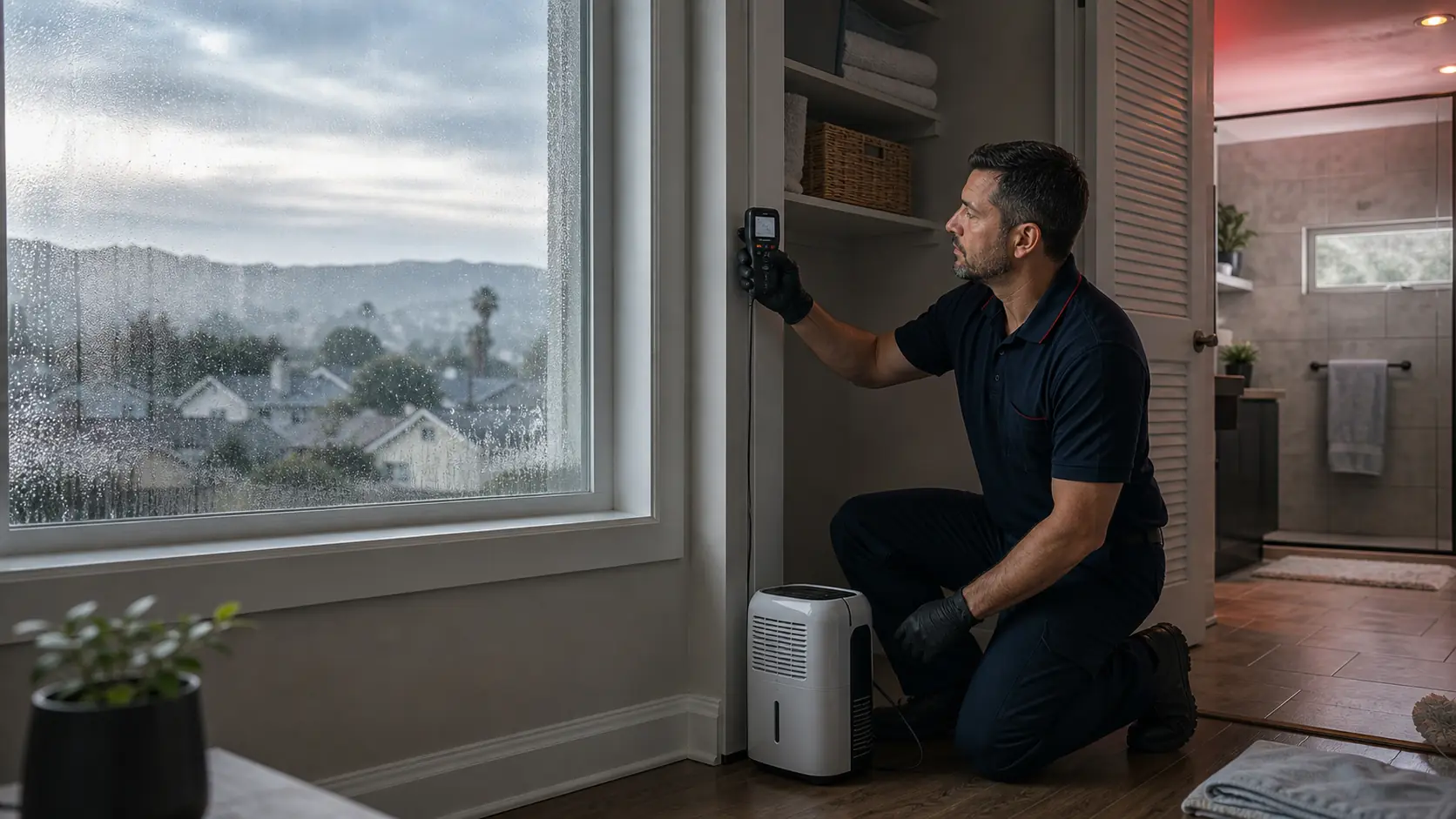
The Bay Area's Mediterranean climate brings concentrated winter rains — including the atmospheric-river storms that drive roof leaks, flooding, and water intrusion. When that moisture gets into a home and isn't fully dried, it sets the stage for mold. Then the mild temperatures the rest of the year keep indoor conditions comfortable for mold to keep growing.
Slab foundations and hidden leaks
A large share of South Bay homes sit on concrete slab foundations, which are prone to slab leaks — under-slab pipe failures that release moisture for weeks before they're noticed. Slow, hidden moisture is exactly what mold needs to establish unseen.
Aging housing and original plumbing
Many neighborhoods across San Jose, Santa Clara, Campbell, and the Peninsula have older homes with decades-old plumbing. Slow leaks behind walls and under floors in these homes are a leading source of the chronic moisture that feeds mold.
Low-ventilation spaces
Mid-century layouts, finished basements and additions, and tightly sealed modern homes can all trap humidity in spots with poor airflow — bathrooms, closets, behind furniture against exterior walls — where condensation and dampness linger.
The common thread: moisture that isn't dried
Notice the pattern: every local mold risk traces back to moisture that wasn't fully removed. A leak that's patched but not dried, a flood that's mopped but not professionally dried, a humid corner that never gets airflow. Mold doesn't appear from nothing — it follows water.
How to keep mold out
- Address leaks and water damage immediately and professionally — fast, complete structural drying is the best mold prevention there is.
- Watch for hidden water damage signs and that telltale musty smell.
- Keep bathrooms and laundry areas ventilated; address condensation.
- Don't ignore slow leaks — they're the classic mold starter in local homes.