

Overview
A huge share of South Bay homes — across San Jose, Cupertino, Sunnyvale and beyond — are built on concrete slab foundations. That construction is durable, but it has one notable vulnerability: slab leaks, where a water line running beneath the foundation springs a leak. Because the water is hidden under concrete, these leaks can run for weeks before you notice, quietly causing damage and feeding mold.
What causes slab leaks
- Aging pipes in older homes — corrosion over decades.
- Abrasion — pipes rubbing against concrete or gravel as the house settles.
- High water pressure stressing lines and fittings.
- Foundation shifting common in California, which can crack or strain pipes.
Warning signs of a slab leak
If your water meter keeps moving with every fixture shut off, that's a strong indicator of a hidden leak.
- A warm spot on the floor (from a hot-water line leak).
- The sound of running water when everything is off.
- An unexplained spike in your water bill.
- Low water pressure.
- Cracks in flooring or walls, or a damp/raised area on the floor.
- A musty smell or mold appearing near the floor — a sign of prolonged hidden moisture.
What to do if you suspect one
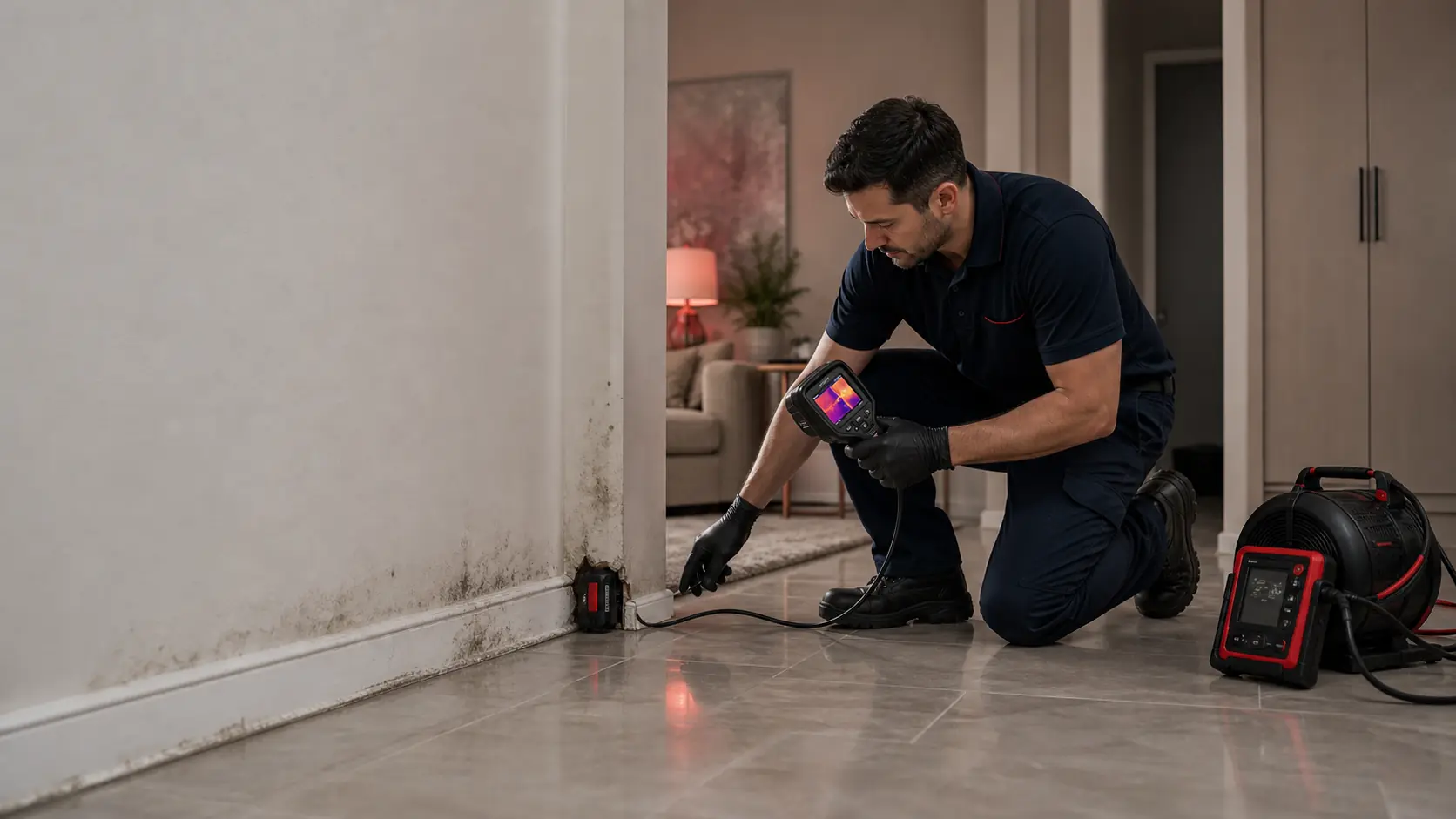
1. Confirm it. A professional can locate a slab leak using thermal imaging and moisture detection — no need to jackhammer blindly. 2. Address the water damage. By the time many slab leaks are found, they've already caused hidden water damage and possibly mold. We extract, dry the affected area, and handle any mold remediation needed. 3. Coordinate the pipe repair. Our focus is the water-damage side — extraction, drying, and restoration — and we can coordinate a licensed plumber for the actual pipe fix so everything's handled.
Don't wait it out
A slab leak won't resolve itself, and the longer it runs, the more it costs — in water bills, structural damage, and mold. Early detection is everything.