

Overview
After a fire — even a small one — the instinct is to grab a sponge and start cleaning. It's understandable, but with soot it often backfires: improper cleaning can smear residue deeper, set stains permanently, and spread the damage to areas the fire never touched. Here's why soot is so tricky and what the right approach looks like. (General information.)
Soot isn't ordinary dirt
Soot is the fine, oily-to-powdery residue left by combustion, and its makeup varies with what burned (wood, plastics, synthetics, grease). That matters because different types of soot require different cleaning methods. Use the wrong one and you don't just fail to clean it — you drive it into the surface.
Why wiping makes it worse
- Dry soot smears. Many soot residues are powdery and must be cleaned with specialized dry methods (like chemical "soot sponges") first. Wiping with a wet cloth or standard cleaner grinds the particles into porous surfaces, turning a removable film into a permanent stain.
- Spreading the residue. Soot becomes airborne easily and clings to everything. DIY cleaning, especially with the wrong tools, redistributes it onto walls, ceilings, and contents that were previously clean.
- Acidic damage accelerates. Some soot is acidic and corrosive. The longer it sits and the more it's smeared, the more it etches and discolors surfaces, metals, and finishes. Improper cleaning prolongs that contact.
- Locking in odor. Wet-cleaning certain soot can set the smoke odor into materials rather than removing it.
The hidden reach of smoke
Smoke and soot travel far beyond the burn area — through doorways, up walls, into HVAC ducts, and into rooms that look untouched. A DIY effort focused on the obvious area misses this hidden contamination, which keeps producing odor and staining later.
What professionals do differently
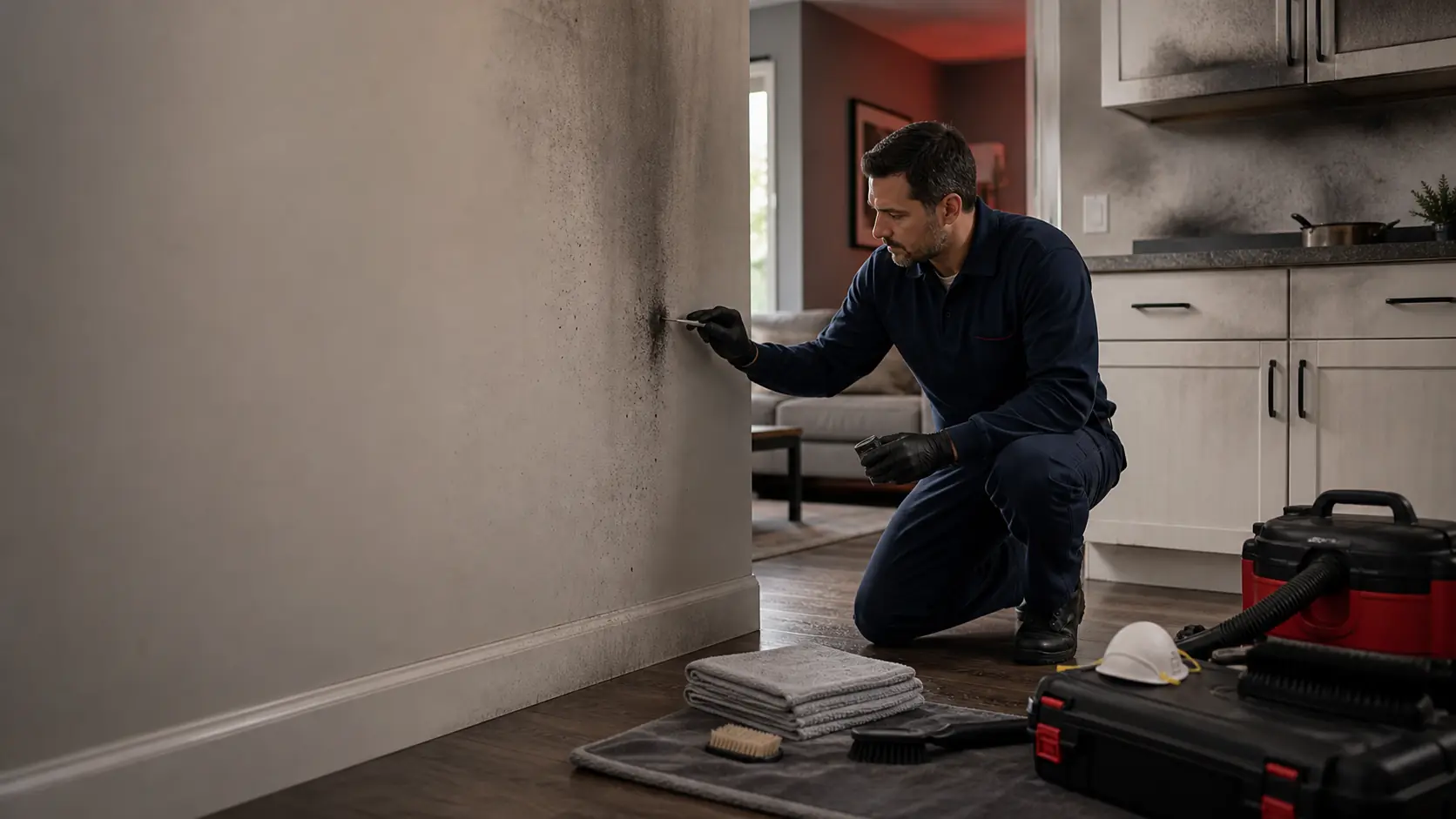
Fire restoration pros assess the type of soot and match the method: dry cleaning where needed, specific cleaning agents for different residues and surfaces, proper handling of contents, HVAC cleaning, and source-level deodorization for the odor. FSRT-certified technicians know which approach each surface and soot type requires — which is what prevents the permanent damage DIY often causes. See how fire damage restoration works.
The bottom line
With soot, doing nothing harmful is better than doing the wrong thing. Resist the urge to scrub. Gentle removal of loose debris is fine, but for real soot and smoke cleanup, the right methods — applied promptly — save surfaces and contents that improper DIY cleaning would ruin.