

Overview
If you've lived in the Bay Area through a winter, you've met an atmospheric river — those long plumes of tropical moisture that park over Northern California and drop staggering amounts of rain in a short time. They're responsible for the South Bay's most serious storm flooding, roof leaks, and water intrusion. The good news: most storm damage is preventable with preparation done before the rain arrives. Here's your prep guide. (General preparedness guidance.)
What an atmospheric river does to homes
These storms combine heavy, sustained rainfall with wind and often saturated ground from prior storms. The result for homes: overwhelmed gutters and drains, roof and skylight leaks, water pooling against foundations, creek and storm-drain overflow in low-lying areas, and — in the worst cases — flooding. Homes near creeks (the South Bay and Peninsula have documented flood history along waterways like San Francisquito Creek) face elevated risk.
Before the season: get the house ready
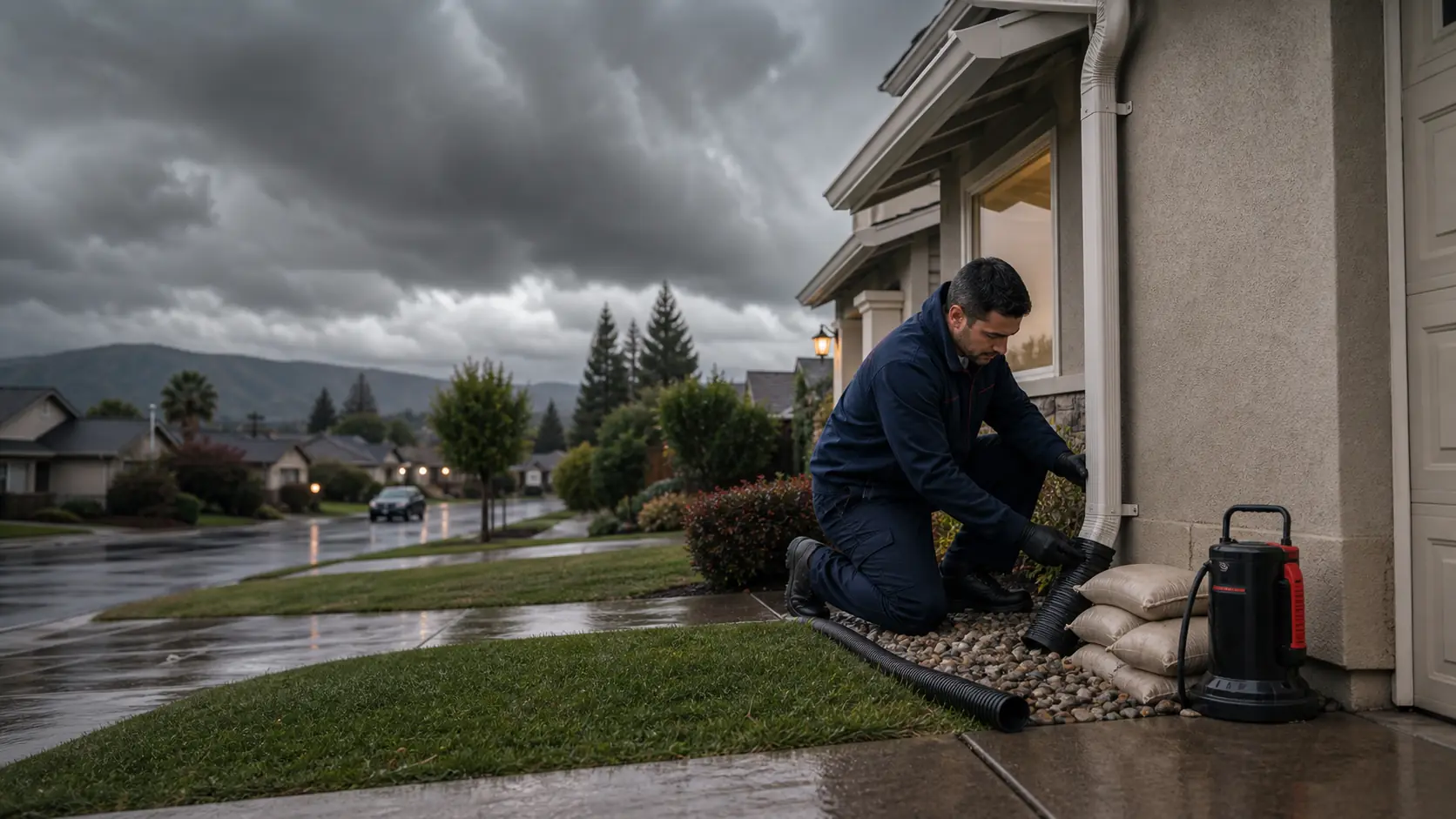
- Clean gutters and downspouts so water drains freely and away from the foundation. Clogged gutters are a top cause of overflow and roof/wall intrusion.
- Inspect the roof for damaged, loose, or missing shingles and check flashing around chimneys and skylights — fix issues before the rain finds them.
- Check grading and drainage — the ground should slope away from your home so water doesn't pool against the foundation. Clear yard drains.
- Seal gaps around windows, doors, and the foundation.
- Test your sump pump (and backup) if you have one.
Before a specific storm hits
- Clear gutters and drains again of fresh leaves and debris.
- Have sandbags ready if you're in a flood-prone or low-lying area (many cities offer sandbag locations — see the local resource guide).
- Secure or store loose outdoor items that wind could throw.
- Know your main water shut-off and your electrical panel location.
- Charge devices and have flashlights ready in case of outages.
Know your flood risk
Check whether your home is in a flood-prone area — proximity to creeks, low-lying streets, and historical flooding all matter. Remember that standard homeowners insurance does not cover flood (rising external water); that requires separate flood insurance. If you're in a higher-risk area, it's worth knowing your status before the season (see does homeowners insurance cover water damage?).
If water gets in despite prep
Act fast — the sooner extraction and drying start, the less damage and the lower the chance of mold. We answer 24/7 during storms: (408) 639-5349. See also what to do when the rainy season floods your home.
The takeaway
Atmospheric rivers are a near-certainty each winter; the damage they cause is not. An afternoon of pre-season prep — gutters, roof, grading, drainage — plus a few before-the-storm steps dramatically lowers your risk.