

Overview
Frozen pipes feel like a problem for snowy states, not Silicon Valley. But here's the counterintuitive truth: *Bay Area homes are often more vulnerable during a cold snap, not less — precisely because our pipes weren't built for freezing weather. When an occasional cold front pushes temperatures below freezing, exposed and under-insulated pipes can freeze, expand, and burst. Here's how to prevent it. (General prevention guidance.)*
Why local pipes are at risk
In regions with regular hard winters, homes are built with pipes deep inside insulated walls and away from the cold. In the mild Bay Area, builders had little reason to insulate against freezing — so pipes often run through uninsulated spaces: exterior walls, attics, crawl spaces, garages, and along the outside of the house. When a rare freeze hits, those pipes have little protection. Water expands as it freezes, the pressure builds, and a pipe can split — then gush when it thaws.
Before a cold snap arrives
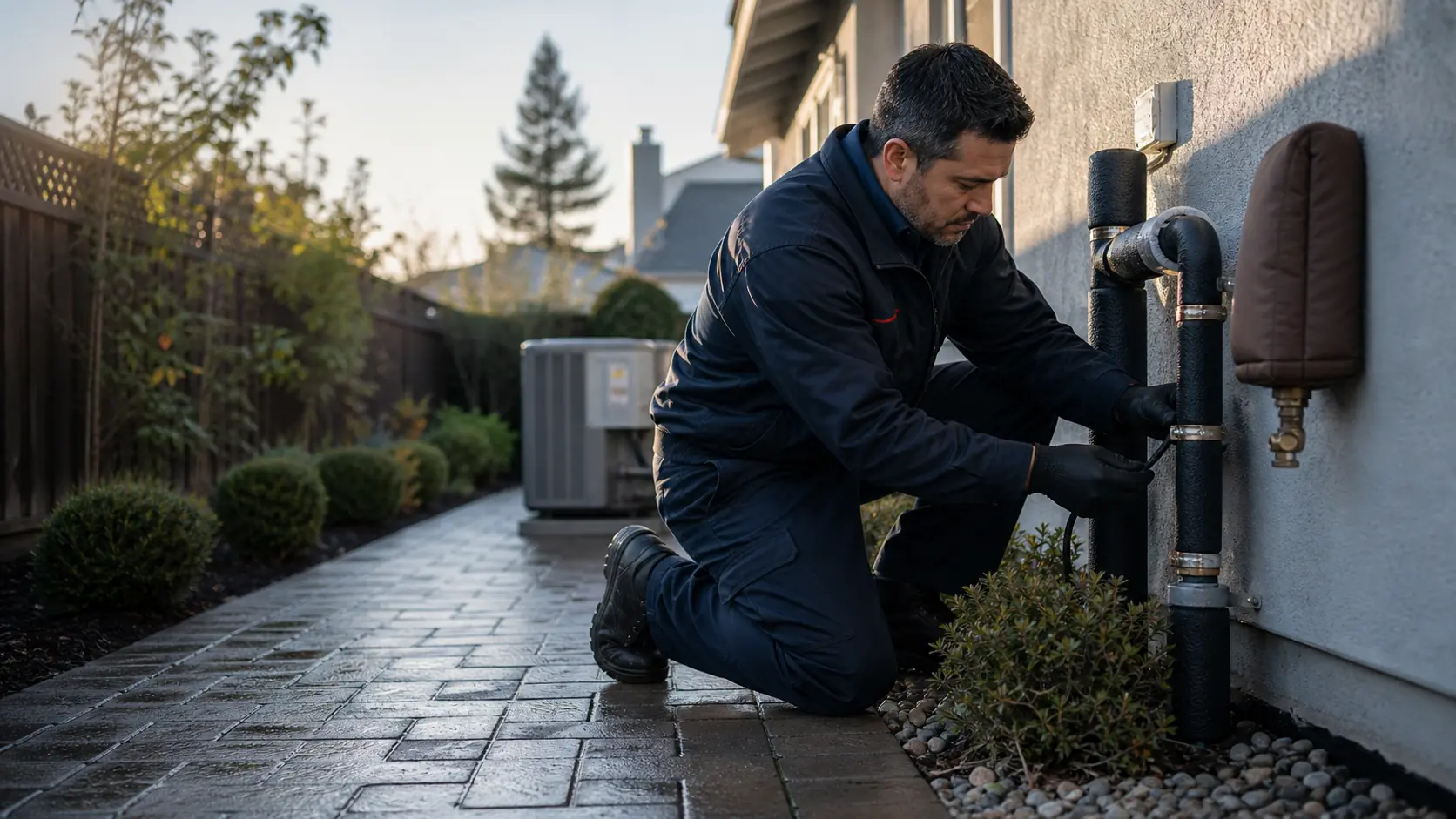
- Insulate exposed pipes in unheated areas — garages, crawl spaces, attics, and along exterior walls. Foam pipe sleeves are inexpensive and effective.
- Disconnect garden hoses and shut off/drain outdoor faucets (hose bibs), or cover them with insulated caps. Outdoor spigots are a top freeze point.
- Seal drafts near pipes — gaps in the foundation, walls, or around the garage door let freezing air reach them.
- Know where your main shut-off valve is, so you can act fast if a pipe does burst.
During a freeze
- Let faucets drip — a slight trickle from faucets served by vulnerable pipes relieves pressure and makes freezing far less likely.
- Open cabinet doors under sinks (especially on exterior walls) to let warm room air reach the pipes.
- Keep the heat on — don't let the house get too cold, even overnight or when away. Maintain a steady temperature.
- If you'll be away during a cold snap, consider shutting off the water at the main and draining the lines.
If a pipe freezes (but hasn't burst yet)
- Shut off the water to that line if you can.
- Thaw gently — warm the area with a hair dryer or space heater (never an open flame). Open the faucet so water flows as it thaws.
- Watch for leaks as it thaws — a frozen pipe may already be cracked.
If a pipe bursts
Shut off your water main immediately and call for help — fast extraction and drying limit the damage. See the full emergency steps in burst pipe? steps to take before help arrives, and our burst pipe response service.
The takeaway
A cold snap is rare here — which is exactly why local pipes aren't ready for it. An hour of prep (insulation, draining outdoor faucets, knowing your shut-off) before a cold front prevents the burst that catches Bay Area homeowners off guard.