
Overview
After years of working alongside insurance adjusters on restoration claims, a few truths stand out — the kind of things that help homeowners get a fair outcome. Here's what we wish every customer knew. (General information, not insurance advice.)
The adjuster works for the insurer — not against you, but not for you
An insurance adjuster's job is to assess the loss on behalf of the insurance company. Most are professional and fair, but their role is to evaluate the claim per the policy — not to maximize your payout. That's not adversarial; it just means you benefit from being prepared with your own thorough documentation and a professional estimate.
Documentation beats arguments
Adjusters work from evidence, not emotion. A well-organized set of photos, an itemized inventory, and a detailed professional restoration estimate do far more for your claim than insisting verbally that the damage is bad. (See documenting damage for your claim.)
A professional estimate speaks their language
Restoration companies estimate using the same industry-standard pricing frameworks adjusters use. When your contractor's estimate is detailed and aligns with those standards, it's easier for the adjuster to approve — and harder for a claim to be quietly underpaid. This is part of why working with an experienced restoration company helps.
Speed protects coverage
Adjusters and policies distinguish "sudden and accidental" damage from "neglect." Acting fast — and documenting that you did — keeps your claim on the right side of that line. Delay is the enemy of coverage. (More in does homeowners insurance cover water damage?.)
You can disagree with an estimate
If the adjuster's assessment seems low or misses damage, you can respectfully push back with supporting documentation, request a re-inspection, or have your restoration contractor discuss specifics with them. Many discrepancies come from simply missing hidden damage — which professional moisture mapping can reveal.
Hidden damage is commonly underestimated
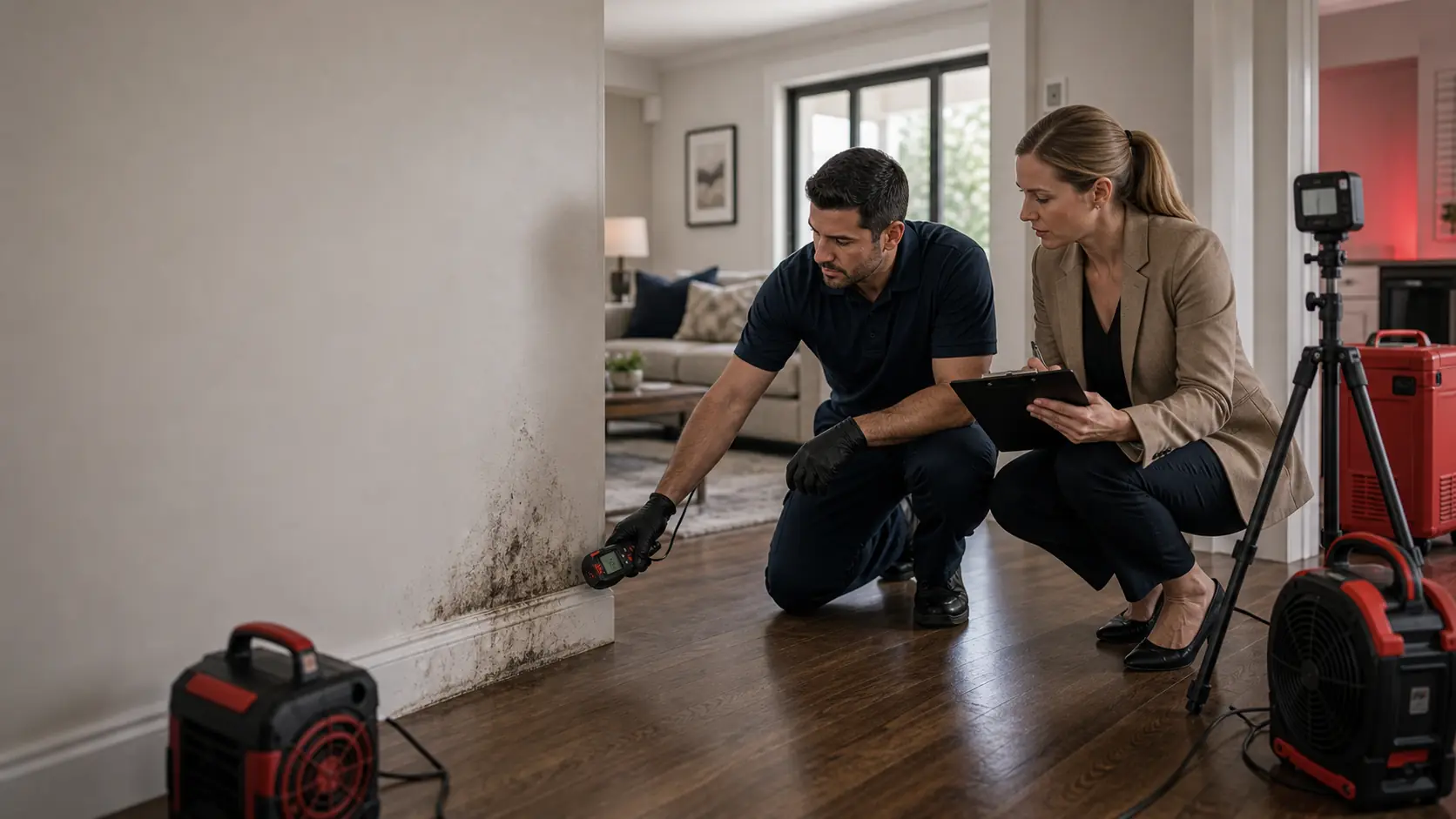
The damage you can see is often less than the damage that's actually there. Moisture wicks into walls, subfloors, and cavities. A reputable restoration company documents this hidden moisture so it's included in the claim rather than discovered (uncovered) later.
Know your options if you're stuck
If a claim is significantly underpaid or denied and you can't resolve it, you have options — your agent, your insurer's appeal process, or a licensed public adjuster who works on your behalf (see do I need a public adjuster?). We're a restoration company, not an adjuster, but we'll give you honest documentation to work with.