

Overview
The most problematic mold is the kind you can't see — growing quietly inside a wall cavity, fed by a hidden leak or trapped moisture. By the time it becomes visible, it's often well established. Here's how to catch hidden mold early, before it spreads. (General information, not medical advice.)
1. The musty smell test
A persistent musty, earthy, "damp basement" odor is the single most reliable early clue to hidden mold — it often shows up well before anything is visible. If a room or closet smells musty even when it looks clean, suspect moisture behind a surface. (See what causes musty smells in a house?.)
2. Stains and discoloration
Look for irregular stains bleeding through paint or drywall, sometimes brownish, greenish, or yellow. These can mean moisture — and mold — behind the surface.
3. Bubbling, peeling, or warping
Paint or wallpaper that bubbles, peels, or cracks, and drywall that warps or feels soft, all point to moisture in the wall. Where there's prolonged moisture, mold usually follows.
4. Allergy-like symptoms that improve when you leave
If household members have unexplained congestion, sneezing, itchy eyes, or respiratory irritation that eases when they're away from home and returns when they're back, hidden mold is one possible cause worth investigating. (For health concerns, see a doctor.)
5. A history of water damage
If a room had a leak, flood, or water damage — especially one that wasn't dried professionally — the odds of hidden mold rise significantly. Mold can begin within 24–48 hours of moisture exposure.
6. Visible mold at edges
Small spots of growth at baseboards, around outlets, where walls meet floors, or near window frames can be the visible edge of a larger hidden colony inside the cavity.
How professionals confirm it
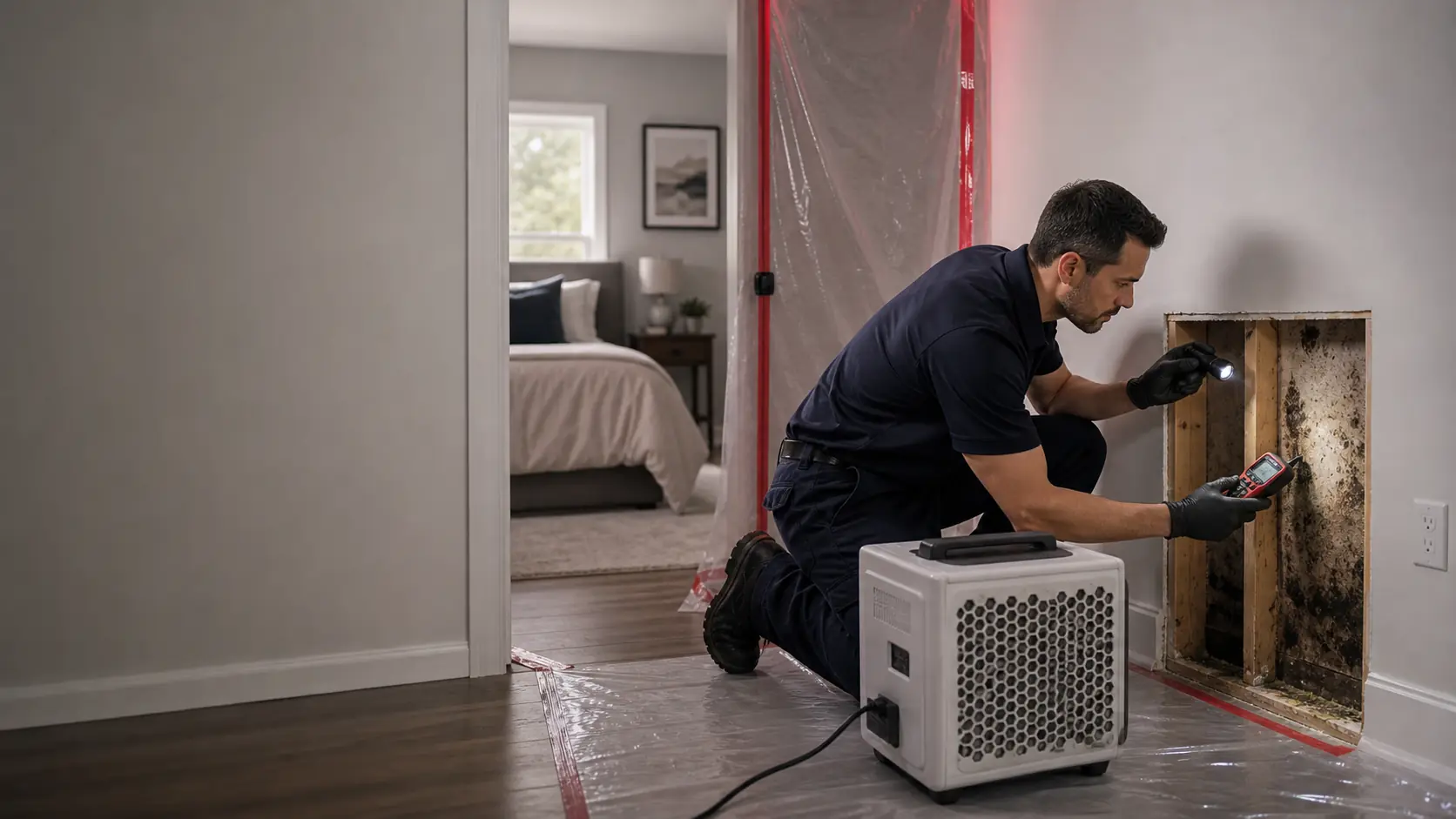
You don't have to tear open walls to find out. Professionals use moisture meters and thermal imaging to detect dampness inside walls non-invasively, and can identify whether conditions support hidden mold — then open only what's necessary. That targeted approach saves your walls and your money.
What to do
Don't ignore the signs hoping they'll resolve. Hidden mold spreads and the moisture feeding it keeps damaging the structure. A professional assessment confirms whether mold is present and how far it's gone.