

Overview
A water stain on the ceiling is easy to ignore — until it spreads or a chunk of drywall comes down. The stain itself is just a symptom; the real question is whether the leak above it is active. Here's how to read the signs and decide whether to worry.
What causes ceiling water stains
- Roof leaks — damaged or aged roofing, flashing failures, or storm damage letting water in (common during the South Bay's winter rains).
- Plumbing leaks — a pipe in the ceiling or the floor above (especially under bathrooms and kitchens).
- Appliance or fixture leaks upstairs — a toilet, tub, or washing machine on the floor above.
- Condensation / HVAC — a clogged AC condensate line or duct condensation.
Is it old or active? How to tell
- Touch it (if reachable and safe): a damp, soft, or cool stain suggests an active leak; a dry, hard, well-defined stain may be old — but don't assume.
- Watch it over a few days, especially after rain or heavy water use upstairs. A stain that grows, darkens, or returns is active.
- Look for sagging — a bulging or drooping ceiling means water is pooling above and could collapse. That's urgent.
- Note the timing — appears or worsens during rain? Likely the roof. During showers/laundry? Likely plumbing above.
When to worry (act now)
- The ceiling is sagging or bulging — keep people away from underneath and address immediately.
- The stain is spreading or recurring.
- You see mold developing around it.
- There's a musty smell — a sign of ongoing moisture.
What to do
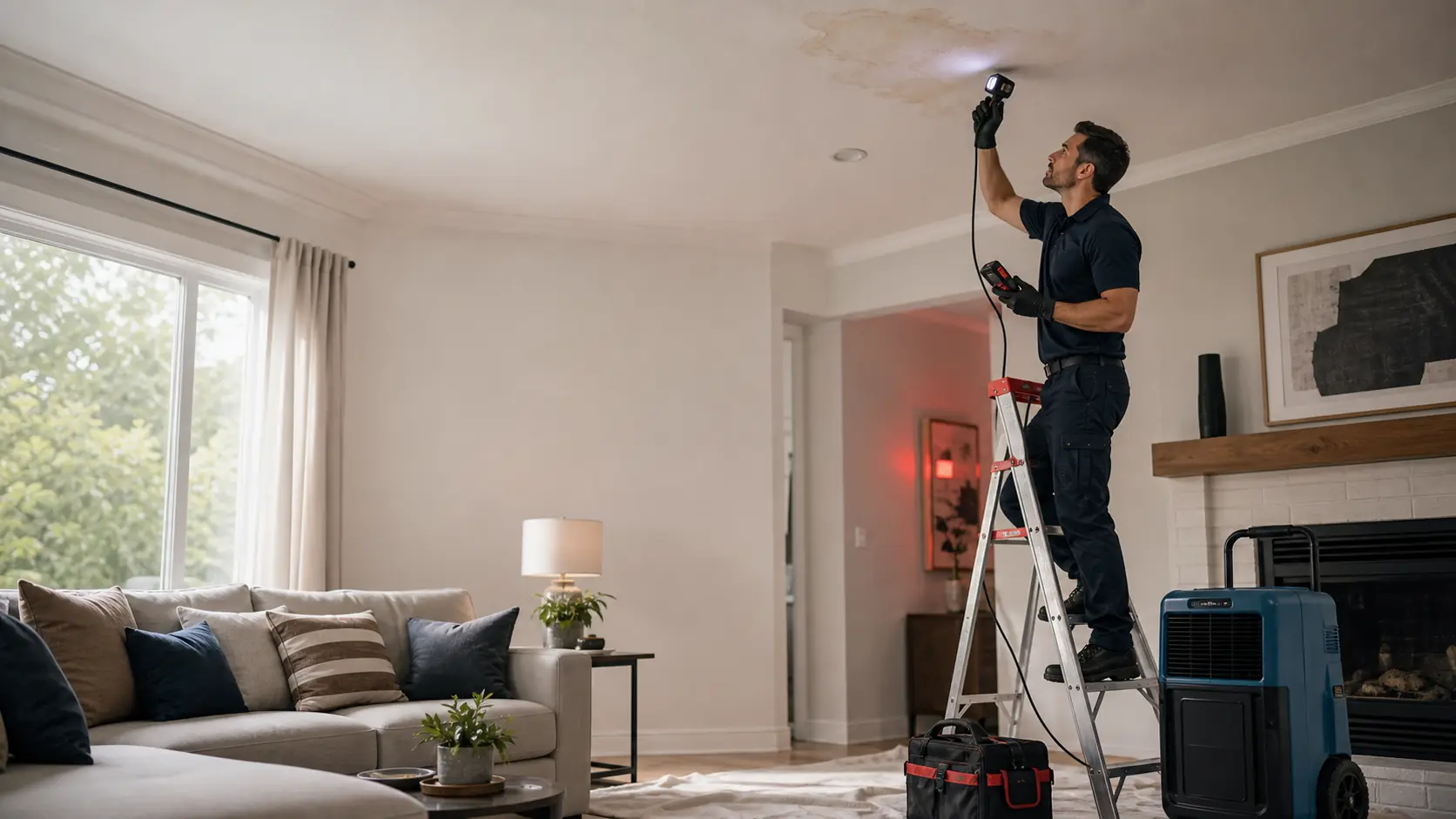
First, find and stop the source — that may mean checking the roof or shutting off water to a fixture above. Then address the water damage: a stained, wet ceiling often hides saturated insulation and framing that need drying to prevent mold. A professional can locate the source with moisture detection and dry the area properly before you repaint — because painting over an active leak just hides it temporarily.