

Overview
Appliances are one of the most common causes of household water damage — and because they sit quietly in laundry rooms, kitchens, and garages, a slow leak can do real damage before anyone notices. Here's what to do when an appliance leaks, and how to head off the next one.
The moment you spot a leak
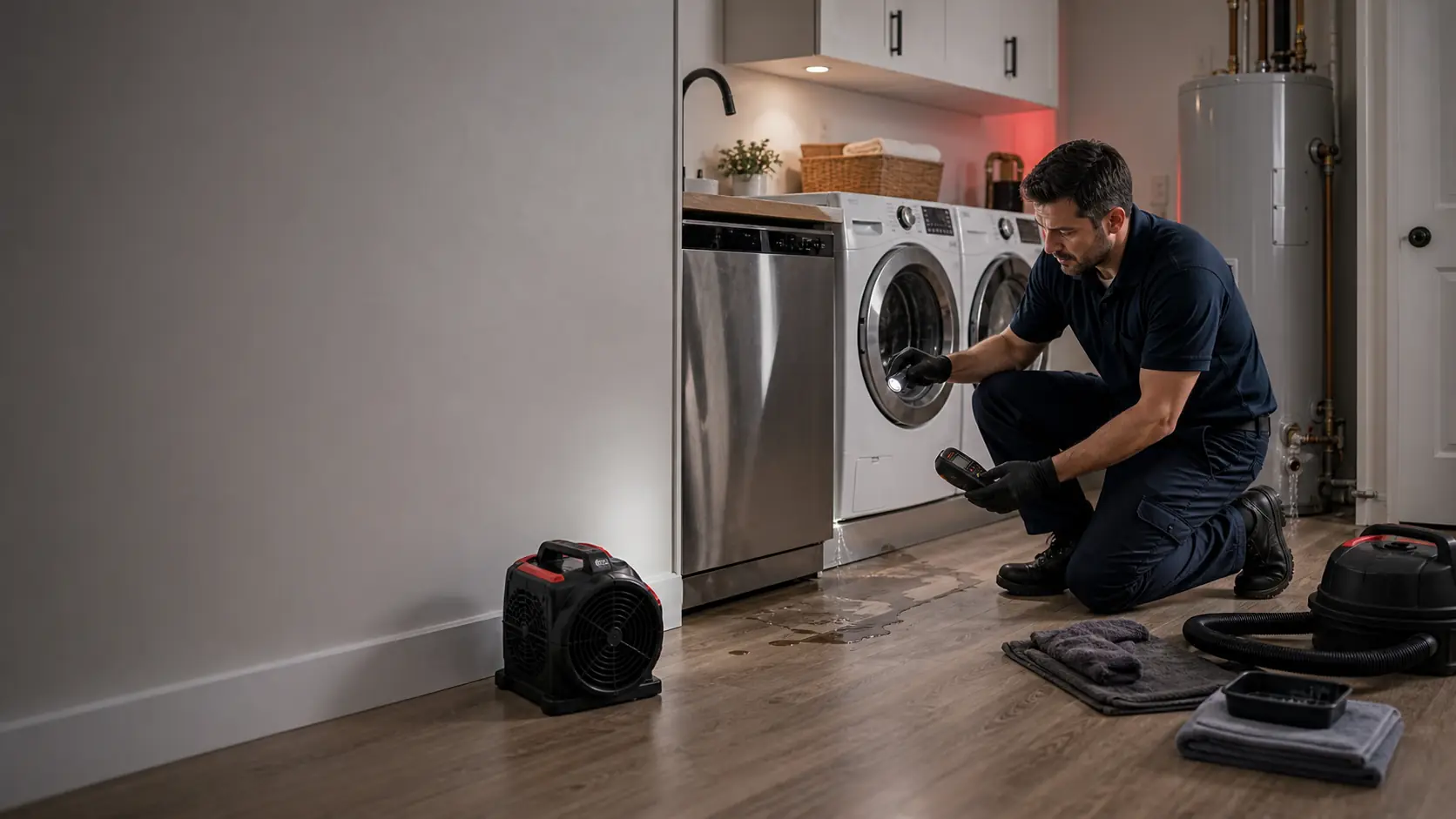
1. Shut off the water to that appliance. Most have a dedicated shut-off valve nearby (under the sink for a dishwasher, behind a washer, near the water heater). If you can't find it or it won't turn, shut off the home's main. 2. Cut the power to the appliance if water is near electrical components — at the outlet or breaker, only if you can do so safely. 3. Stop the spread. Soak up what you safely can and move items off the wet floor. 4. Assess how far it went. Water travels — under cabinets, into wall bases, beneath flooring. What looks like a small puddle often hides a larger wet area.
The appliances most likely to flood you
- Water heaters can fail dramatically when the tank corrodes — releasing dozens of gallons at once, often in a garage or closet where it's not noticed quickly.
- Washing machines are a leading culprit, usually from a burst or worn supply hose — one of the most common single causes of home water damage.
- Dishwashers leak from worn door seals, supply lines, or drain connections, quietly soaking the cabinet and subfloor beneath.
- Refrigerators with ice/water lines can develop slow drips behind the unit that go unseen for weeks.
When to call a pro
If water reached cabinetry, flooring, or wall bases, or sat long enough to soak in, surface cleanup isn't enough — trapped moisture causes mold. A professional can verify whether hidden materials are wet and dry them properly.
Prevention that actually works
- Replace rubber washer supply hoses with braided steel ones, and check them yearly.
- Know the age of your water heater (most last 8–12 years) and watch for rust or pooling.
- Inspect under sinks and behind appliances periodically for early drips.
- See our annual water-damage prevention checklist.