

Overview
Winter storms get the headlines, but a huge share of home water damage actually comes from something far more mundane — the appliances humming away in your kitchen, laundry room, and garage. And summer tends to bring a spike. Here's why, and the handful of simple checks that prevent a soaked home. (General prevention guidance.)
Why summer is appliance-failure season
A few summer factors combine to stress your appliances and their water lines:
- Heavier use. Kids home from school, more laundry, more dishwasher cycles, ice makers working overtime in the heat.
- Heat and pressure. Higher temperatures can stress hoses, seals, and fittings.
- Travel. Homes sit empty during vacations, so a leak that starts has hours or days to flood undetected (see prevent water damage in an empty home).
The usual culprits
- Washing machine hoses — the classic. A burst supply hose can release water at full pressure for as long as it runs. Rubber hoses degrade over time.
- Water heaters — when a tank corrodes through, it can dump dozens of gallons, often in a garage or closet where it isn't noticed quickly.
- Dishwashers — worn door seals, supply lines, or drain connections leak slowly into the cabinet and subfloor.
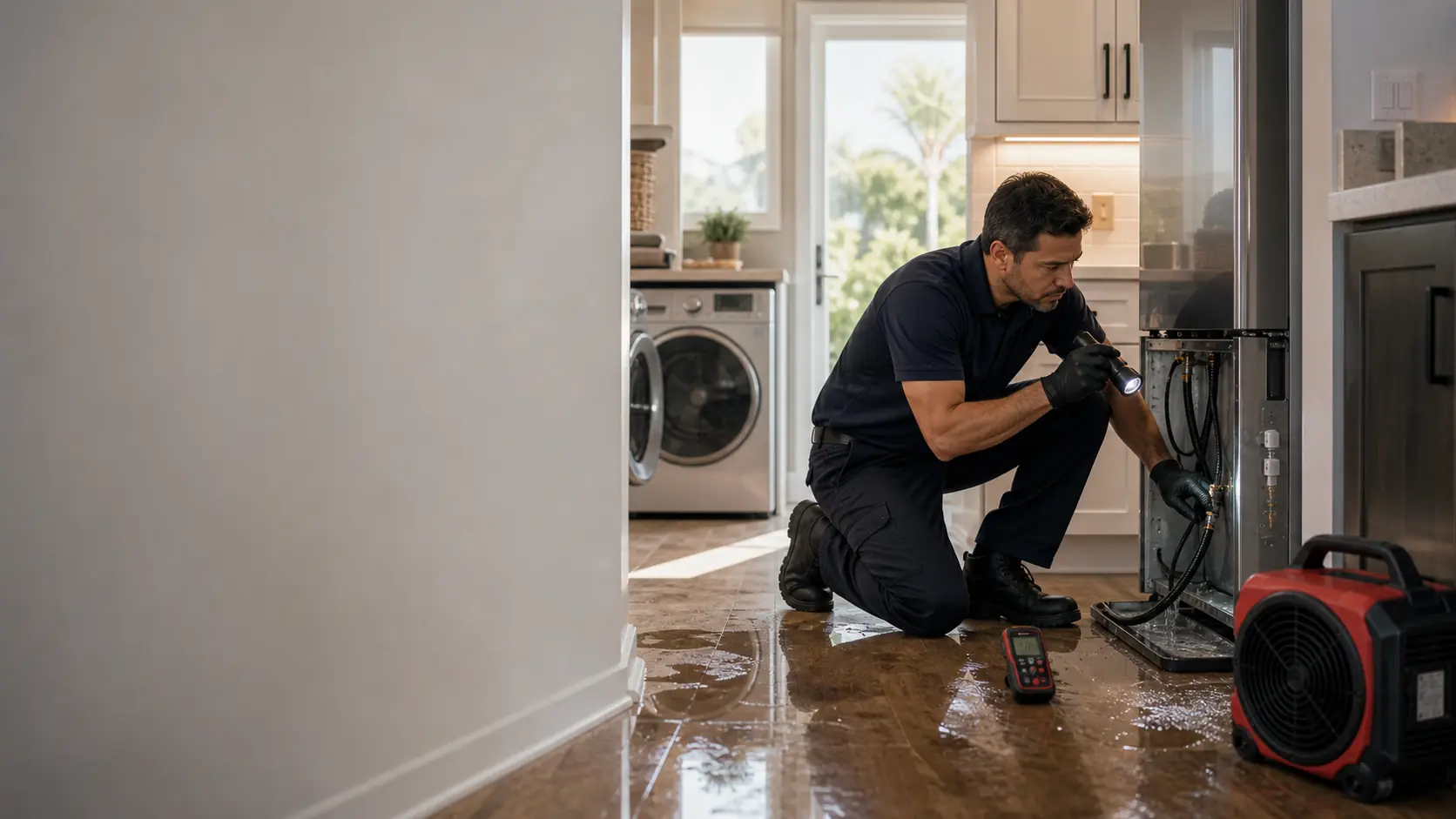
- Refrigerator ice/water lines — small drips behind the unit that go unseen for weeks.
- AC condensate lines — a clogged line can overflow and cause ceiling or floor damage.
Simple prevention that works
- Replace rubber washer hoses with braided steel ones, and check them yearly for bulging or cracking.
- Know your water heater's age — most last 8–12 years. Watch for rust, moisture, or a pan that's collecting water.
- Check under sinks and behind appliances periodically for early drips, corrosion, or warping.
- Clear the AC condensate line as part of summer HVAC maintenance.
- Consider leak-detection devices or automatic shut-off valves for high-risk appliances.
- Shut off supply lines to the washer when you're away for an extended trip.
If an appliance does fail
Speed is everything — shut off the water, cut power if it's safe, and address hidden moisture before mold starts. The full reactive steps are in dishwasher, washer & water heater leaks: what to do.
The takeaway
A five-minute check of hoses and connections — and replacing the worst offenders — prevents one of the most common and avoidable causes of home water damage. Prevention is far cheaper than restoration.