

Overview
After water damage, you're juggling cleanup, insurance, and daily life — and wondering whether you can stay put or need to leave. It depends on a few key safety factors. Here's how to think it through. (This is general guidance, not professional safety or medical advice — when in doubt, consult the appropriate professionals.)
When you likely need to leave, at least temporarily
- Electrical hazards. If water has reached outlets, wiring, or the electrical panel, those areas are dangerous until an electrician or the utility confirms they're safe.
- Contaminated (black) water. Sewage backups or storm flooding carry pathogens. Affected areas should be considered unsafe to occupy until professionally cleaned and disinfected — see sewage backup: health risks.
- Structural concerns. Sagging ceilings, buckling floors, or compromised supports mean you should stay out until assessed.
- Significant mold or sensitive occupants. If there's substantial mold, or household members have respiratory conditions, allergies, or weakened immunity, staying may not be advisable until remediation is done.
When staying is often fine
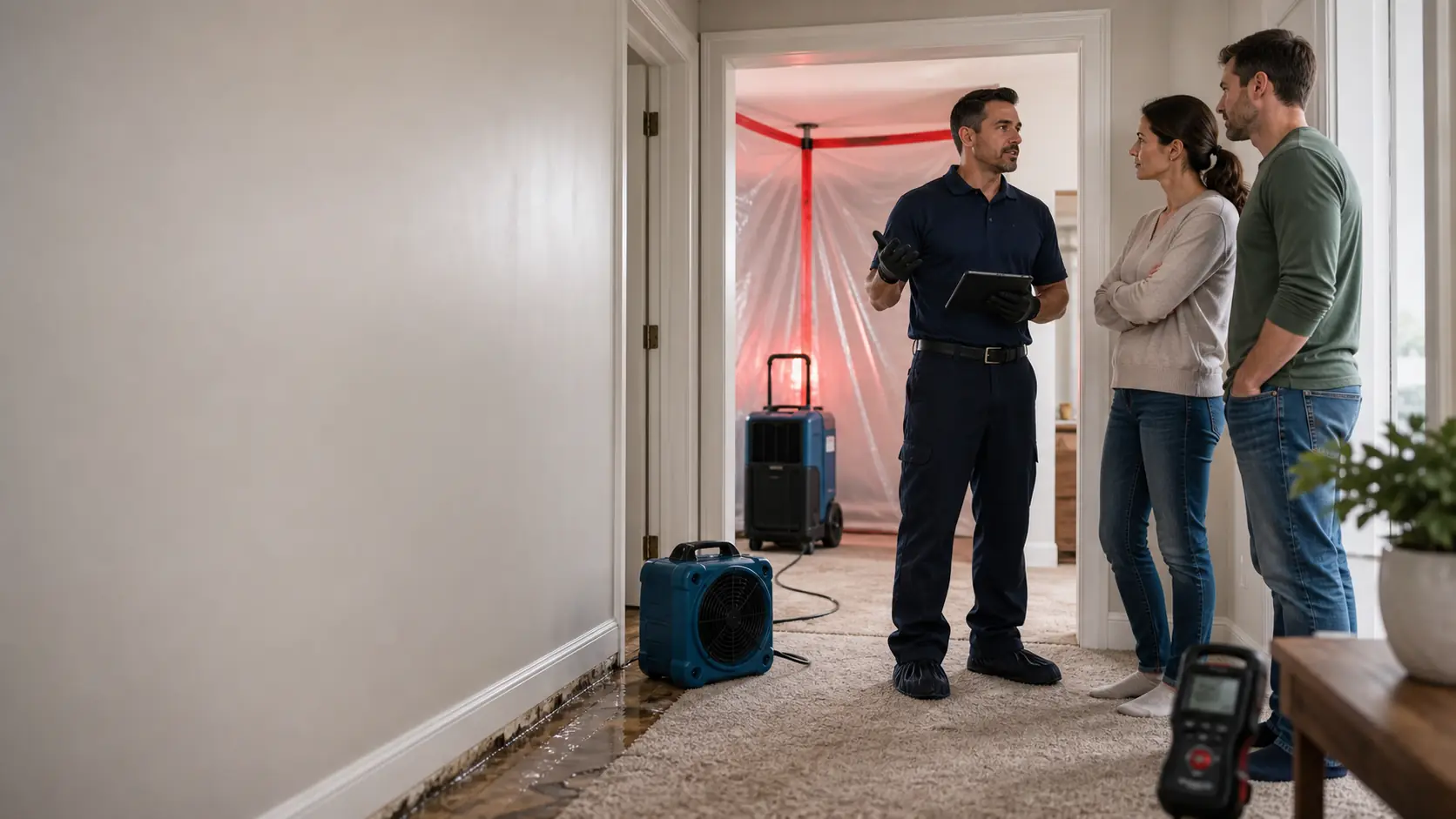
If the damage is localized clean water (Cat 1), there are no electrical or structural hazards, and the affected area can be isolated while it's dried, many homeowners stay in unaffected parts of the home. Drying equipment runs noisily for several days, but it's generally safe to be around.
The practical considerations of staying
Even when it's safe, restoration involves running air movers and dehumidifiers around the clock, restricted access to affected rooms, and possible disruption to plumbing or power in those areas. Some people prefer to relocate briefly for comfort.
Will insurance help with temporary housing?
If your home is genuinely uninhabitable due to a covered loss, many homeowner policies include Additional Living Expenses (ALE) coverage for temporary housing. Check your policy and ask your insurer — and see how we handle insurance claims.
The bottom line
When safety factors are present — electricity, contamination, structural issues, or significant mold — err on the side of leaving and let professionals assess. We'll give you a straight answer about your specific situation during the inspection.