Overview
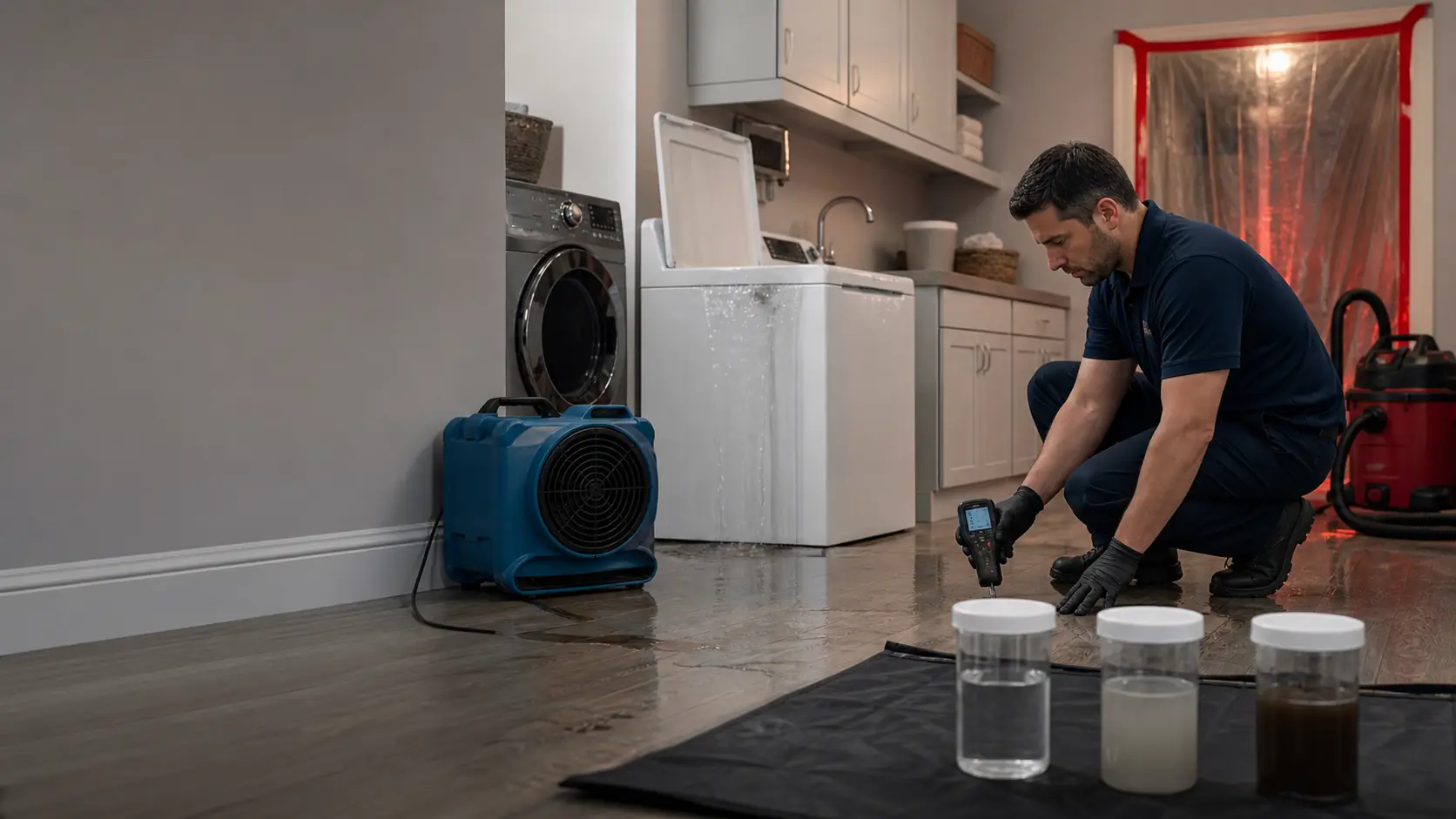
Not all water damage is equal. The restoration industry classifies water into three categories based on how contaminated it is — and that category determines how the cleanup must be handled, what can be saved, and the safety steps required. Here's what each means in plain English.
Category 1 — Clean water
This is water from a clean, sanitary source: a broken supply line, an overflowing sink or tub (no contaminants), or rainwater that hasn't picked up pollutants. It poses little immediate health risk. But here's the catch most people miss: Cat 1 water doesn't stay clean. As it sits and contacts flooring, drywall, and dirt, it degrades — often into Category 2 within 24–48 hours. That's why even "clean" floods are urgent.
Category 2 — Gray water
Gray water carries some contamination and can cause illness or discomfort if contacted. Common sources include washing-machine or dishwasher overflow, sump-pump failures, and toilet overflow containing urine but no solids. Gray water requires careful removal, cleaning, and sanitizing — and porous materials it has soaked may need to be removed.
Category 3 — Black water
Black water is grossly contaminated and dangerous. It includes sewage backups, flooding from rivers or storm drains, and any water carrying harmful bacteria, viruses, or other pathogens. This is a biohazard. It requires full protective protocols, removal of unsalvageable porous materials (like carpet and drywall it has contacted), and thorough disinfection. Never attempt to clean black water yourself — see our sewage cleanup service and sewage backup: health risks & what NOT to do.
Why the category matters to you
The category drives three things: safety (what protective steps are needed), what's salvageable (clean water saves more materials; black water requires more removal), and cost (more contamination means more labor and disposal). Our IICRC-certified crews identify the category the moment they arrive and handle each correctly — you can see the full sequence on our restoration process page.
The takeaway
Time turns clean water dirty. Whatever the category, fast professional response limits both the contamination and the cost.